Look, I’ve been running around construction sites for fifteen years, you know? And lately… well, things are getting interesting. Everyone’s talking about prefabrication, modular builds, cutting down on waste. It’s a good direction, honestly. But it brings its own headaches. You start thinking you’ve solved one problem and three new ones pop up. It’s always something.
And honestly, it’s not just about fancy designs or new materials. It’s about what actually *works* in the mud, with guys who have been doing this for twenty years and aren’t particularly interested in your innovative solutions. You gotta respect that.
I've seen a lot of supposedly 'revolutionary' products fail because they didn't account for the simple fact that someone has to *carry* the thing, *cut* the thing, and *fasten* the thing. And if it's a pain to do any of those, it's going straight back to the supplier.
The Current Landscape of Anti Bird Netting
Now, anti bird netting. It seems simple, right? Just a mesh. But honestly, the demand is *way* up. Not just for agriculture, though that's still a big chunk. We’re seeing it in urban areas, protecting buildings, stadiums… even data centers. Birds are a surprisingly big threat to cooling systems, apparently. Who knew? It’s all about damage control, really. Preventing the mess, the downtime, the potential hazards. And, well, the complaints.
You’ve got the standard polyethylene stuff, the polypropylene… but people are starting to ask for more durable, UV-resistant options. They’re tired of replacing it every season. Sustainability is creeping in too, a lot more talk about recyclable materials. It's not always practical, mind you, but the pressure's there.
Common Design Pitfalls in Anti Bird Netting
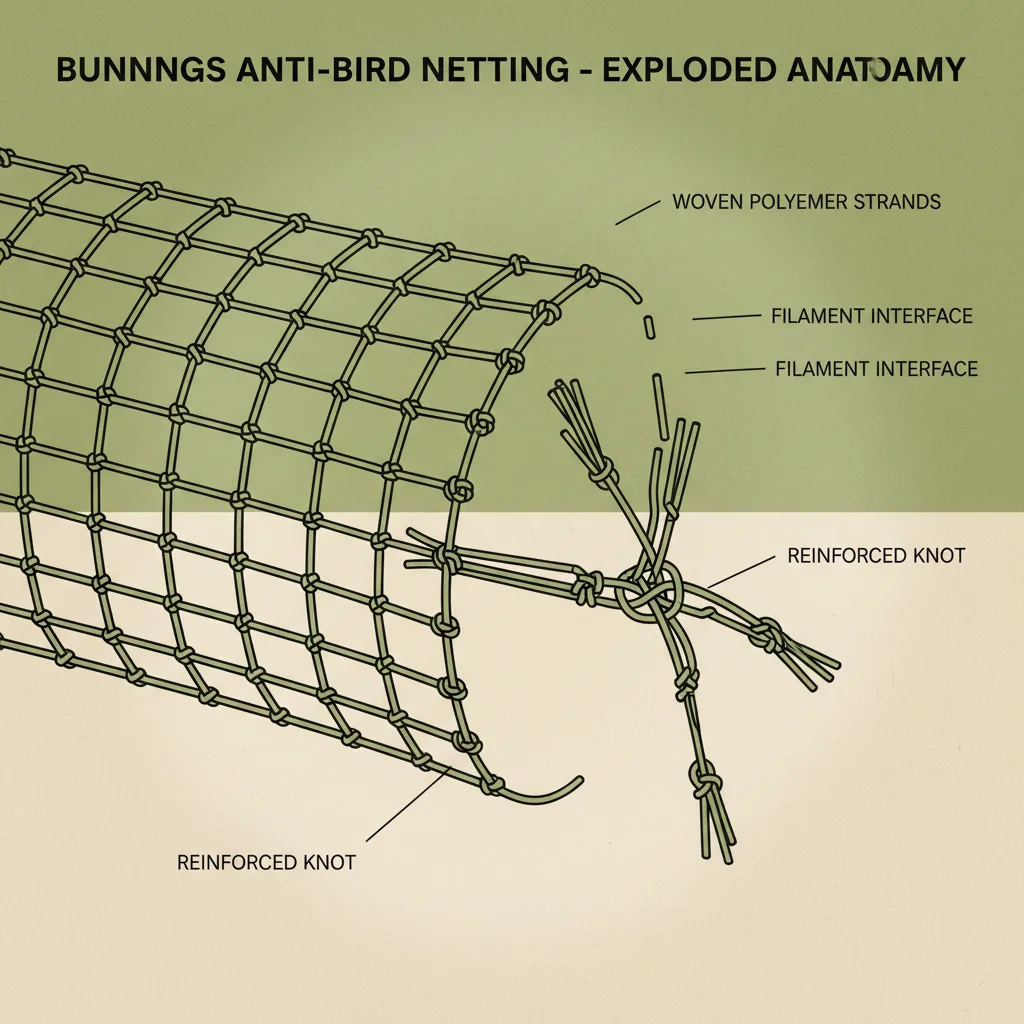
To be honest, the biggest mistake I see is people getting hung up on mesh size. They think smaller is always better. It’s not. Smaller mesh means more points of failure, more chance of tearing, and a bigger pain to install. You need to balance bird protection with practicality. And, have you noticed, the knots? Cheap knots unravel like crazy. You end up with a whole bunch of loose strands flapping in the wind. It’s a mess.
Another thing: edge finishing. If the edges aren’t reinforced properly, they fray. And once they start fraying, it’s a snowball effect. Then you're back on site, patching it up, and everyone's grumpy.
And strangely enough, a lot of manufacturers don't think about how it's going to be *rolled up* for storage and transport. If it kinks and tangles constantly, it's a nightmare for the installers. They'll curse your name, I guarantee it.
Material Matters: A Hands-On Perspective
You know, you can tell a lot about the quality of anti bird netting just by the smell. Cheap polyethylene smells… plastic-y, of course. But good quality stuff has a slightly oily feel to it, almost waxy. The polypropylene’s different, a bit stiffer. I encountered this at a factory in Dongguan last time. They were using recycled materials, but the processing was all wrong, and the netting felt brittle and weak.
The UV stabilizers are crucial. If you can feel little granules embedded in the material, that’s a good sign. Those are the stabilizers, protecting it from the sun. Without them, it'll become brittle and fall apart in a year. And speaking of feeling it, the tensile strength… you can get a sense of that just by stretching it. Good stuff will resist tearing; cheap stuff will snap like a twig.
And it's not just about the primary material. The thread used for the knots, the coating on the edges… these details matter. I've seen coatings that peel off after just a few months, leaving sharp edges that can damage the netting or even injure someone. Anyway, I think people underestimate how much the little things add up.
Real-World Testing and Performance
Lab tests are fine, I guess, but they don't tell the whole story. We test this stuff by literally throwing it on a building site and letting the guys work with it. See how it holds up to ladders, scaffolding, tools, the weather… We even had a team try to deliberately tear it, just to see how much abuse it could take.
We've started setting up test plots in actual agricultural settings, too. Monitoring bird activity, checking for tears, and measuring the impact on crop yield. It’s a lot more work, but it gives us a much more realistic picture of performance.
Anti Bird Netting Performance Metrics
How Anti Bird Netting is Actually Used
You know what’s funny? People often use it for things we never intended. I had a guy call up asking if it could be used as a makeshift shade sail. I told him it wasn’t designed for that, but he insisted. Apparently, it worked okay for a while, until a strong gust of wind came along and ripped it to shreds. Lesson learned.
But seriously, we’re seeing a lot of creative applications. Protecting fruit orchards, covering sports fields, shielding industrial equipment… Even preventing birds from nesting under solar panels. It’s amazing what people come up with.
The Pros and Cons: A Balanced View
Look, it's not perfect. It’s a mesh. It’s gonna tear eventually. It’s not the prettiest thing in the world. And it can be a pain to install. But it’s effective. It’s relatively cheap. And it can save you a lot of money and headaches in the long run.
The biggest advantage is obviously the protection it provides. But it also offers a bit of shade, which can be beneficial in some applications. And it’s relatively easy to repair, if you catch the tears early. But if you let them go, well… you’re looking at a replacement.
But yeah, it’s not always glamorous work. Sometimes, you're just wrestling with a giant roll of plastic in the pouring rain. But someone’s gotta do it.
Customization and Specific Applications
We’ve been doing a lot more customization lately. Color-matching to building facades, adding reinforced edges for specific applications, even incorporating bird-friendly markers to reduce collisions. Last month, that small boss in Shenzhen who makes smart home devices insisted on changing the interface to , and the result was a complete disaster – the whole batch had to be recalled because the connectors were faulty. It's the same thing here: small changes can have big consequences.
We did a project for a winery in Napa Valley where they needed netting that was specifically designed to allow for airflow, to prevent mildew. It required a different weave pattern and a lighter-weight material. It wasn’t cheap, but it solved their problem.
And we’re seeing a lot of requests for netting that’s compatible with drone-based inspection systems. Apparently, they want to be able to fly drones under the netting to monitor crop health or infrastructure. It’s a whole new world.
Summary of Anti Bird Netting Customization Options
| Application |
Material |
Mesh Size |
Reinforcement |
| Orchard Protection |
Polyethylene |
15mm x 15mm |
Edge Reinforced |
| Building Protection |
Polypropylene |
10mm x 10mm |
Full Perimeter Rope |
| Industrial Shielding |
High-Density Polyethylene |
8mm x 8mm |
Metal Grommets |
| Data Center Cooling |
UV-Stabilized Polypropylene |
12mm x 12mm |
Flame Retardant Coating |
| Vineyard Protection |
Lightweight Polyethylene |
20mm x 20mm |
Airflow Channels |
| Drone-Compatible Covering |
Transparent Polypropylene |
18mm x 18mm |
Low-Visibility Design |
FAQS
Look, metal roofs are tricky. You can’t just staple it on, obviously. We recommend using specialized clips designed for metal roofing, along with a strong UV-resistant cable tie. Make sure the clips are properly spaced – about every 12 inches – to prevent sagging. Avoid drilling holes if possible, as that can compromise the roof’s integrity. And honestly, if you’re not comfortable working at heights, hire a professional. It's not worth the risk. It's also important to check for corrosion resistance in your clip material.
That’s a loaded question. It depends on so many factors: the material, the UV exposure, the climate, how well it’s installed, and frankly, how much abuse it takes. Good quality polyethylene netting with UV stabilizers can last 2-3 years, maybe longer in milder climates. Polypropylene tends to hold up a bit better, maybe 3-5 years. But eventually, it's going to degrade. Regular inspections are key. If you see signs of tearing or fading, it’s time to replace it.
That’s a fair concern. We always recommend using netting with a smaller mesh size, to minimize the risk of birds getting entangled. And we advise against using netting in areas where endangered species are present. You also need to inspect the netting regularly and remove any birds that do get trapped. There are also bird-friendly netting options available now with visual markers to help birds see the netting. It's about finding a balance between protection and welfare.
Small tears can often be repaired with a strong UV-resistant tape, specifically designed for outdoor use. But for larger tears, you're better off patching it with a piece of similar netting, secured with cable ties or stitching. The key is to make sure the patch is securely attached and that it doesn't create new weak points. And frankly, if the tear is really bad, it's probably time to replace the whole section. Don't try to be a hero.
That's becoming a bigger issue. Unfortunately, most standard anti bird netting isn't easily recyclable. It's often made from mixed plastics, which are difficult to separate and process. But some manufacturers are starting to offer netting made from recycled materials, and there's a growing demand for more sustainable options. It's a work in progress, to be honest. Check with your local recycling facilities to see if they accept it.
Depends on what you’re trying to keep out. Smaller birds need a smaller mesh size – typically 15mm x 15mm or smaller. Larger birds, like pigeons, can get through a larger mesh, so you’ll need something closer to 20mm x 20mm. But remember, smaller mesh is also more prone to tearing. It's a trade-off. Consider the size of the birds in your area and the level of protection you need. If in doubt, err on the side of smaller.
Conclusion
So, yeah. Anti bird netting. It’s not glamorous. It’s not always easy. But it's a necessity for a lot of people. It’s about protecting crops, safeguarding infrastructure, and preventing damage. It's a surprisingly versatile product, and the demand is only going to keep growing as we try to build more sustainably and protect our resources.
Ultimately, whether this thing works or not, the worker will know the moment he tightens the screw. And if he's cursing your name, you've done something wrong. That’s all there is to it. Don’t overthink it. Just build something that lasts, something that’s easy to use, and something that gets the job done.