In the world of heavy machinery and industrial lifting, space efficiency and power are often at odds. However, the 4 stage telescopic hydraulic cylinder provides the perfect synergy, offering an impressive extended length while maintaining a compact collapsed height. These specialized actuators are essential for applications where a long stroke is required but the installation space is severely limited. Whether it is for dump trucks, aerial platforms, or specialized construction equipment, understanding the mechanics and benefits of these cylinders is key to optimizing operational efficiency. In this guide, we will explore the technical nuances and practical advantages of this powerful hydraulic solution.
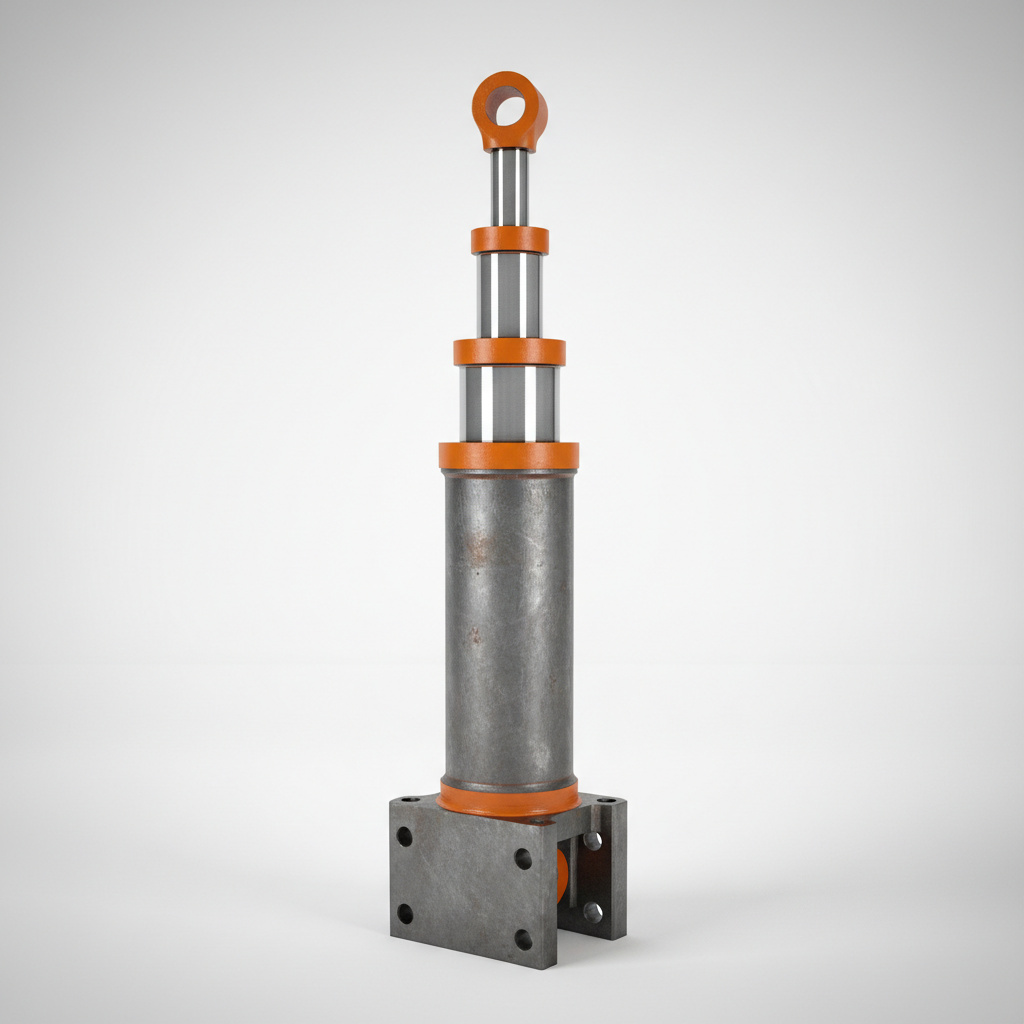
A 4 stage telescopic hydraulic cylinder operates on a nested principle. It consists of a base cylinder and three progressively smaller stages (sleeves) that slide inside one another. When hydraulic fluid is pumped into the cylinder, the stages extend one by one, starting from the largest diameter and ending with the smallest. This "telescoping" action allows the cylinder to achieve a stroke length that is significantly greater than its own collapsed length. This design is critical for maximizing the lifting angle in tipping trailers and ensuring stability during high-reach operations.
Engineering Insight: The sequential extension is controlled by the internal pressure and the surface area of each stage, ensuring a smooth and controlled ascent of the load.
The primary appeal of the 4 stage telescopic hydraulic cylinder is its unmatched ability to provide a high stroke-to-closed-length ratio. Unlike standard cylinders that would require a massive footprint to achieve similar reach, the telescopic design keeps the vehicle or machine compact. Additionally, these cylinders are engineered to handle immense loads, providing the necessary force to lift heavy debris or elevate platforms safely. The precision engineering of the seals and polishing of the stages ensure minimal friction and leakage, leading to a longer service life even in harsh outdoor environments.
Primary Benefits:
• Space Optimization: Massive reach with minimal retracted space.
• Increased Efficiency: Faster deployment in specific industrial cycles.
• Versatility: Adaptable to various mounting configurations.
• High Load Capacity: Designed for heavy-duty industrial lifting.
When deciding between a standard hydraulic ram and a 4 stage telescopic hydraulic cylinder, the decision usually comes down to the available installation space. Standard cylinders are simpler and often more robust for short-stroke, high-pressure tasks. However, if you need to extend a load several meters while only having one meter of space for the cylinder, the telescopic version is the only viable option. While they are more complex in construction, the trade-off in functionality is indispensable for the transport and construction sectors.
The versatility of the 4 stage telescopic hydraulic cylinder allows it to be used across various heavy industries. In the logistics sector, it is the heart of hydraulic tipping trailers, allowing the bed to lift at a steep angle for efficient unloading. In the construction field, these cylinders power scissor lifts and aerial work platforms, enabling workers to reach heights safely. Additionally, they are used in specialized firefighting equipment and mining machinery where reach and retraction are critical for maneuverability in tight underground or urban spaces.
When specifying a 4 stage telescopic hydraulic cylinder, several technical parameters must be considered to ensure the equipment operates safely. The bore diameter of the first stage determines the initial lifting capacity, while the material grade of the steel ensures resistance to bending under load. Most high-end cylinders utilize hard-chrome plated rods to prevent corrosion and reduce wear on the seals. Below is a general specification table for a typical industrial-grade 4-stage cylinder.
To ensure your 4 stage telescopic hydraulic cylinder performs reliably for years, a strict maintenance schedule is necessary. The most critical factor is hydraulic fluid cleanliness; contaminants can score the polished surfaces of the stages, leading to seal failure. Regular inspection of the seals for leaks and checking the mounting bolts for tightness are also essential. Additionally, ensuring that the cylinder is operated within its rated load and angle prevents "side-loading," which can cause the stages to bend or jam during retraction.
The 4 stage telescopic hydraulic cylinder is an engineering marvel that solves the conflict between reach and space. By providing a compact folded form and an expansive extended stroke, it enables industries to design more efficient and capable machinery. Investing in high-quality materials and adhering to proper maintenance ensures that these components remain the backbone of your lifting operations. For those seeking reliability and precision, the telescopic cylinder is the gold standard in hydraulic actuation.
The lifting capacity is primarily determined by the diameter of the largest (base) stage and the hydraulic pressure applied to the system. Because the surface area decreases with each subsequent stage, the force exerted is highest when only the first stage is extended and decreases as more stages emerge. Engineers must calculate the load based on the smallest stage to ensure the cylinder can handle the weight at full extension without failing or buckling.
Jamming is usually caused by "side-loading," where the load is not perfectly centered, causing the stages to tilt slightly. To prevent this, ensure that the mounting points are aligned and that the application design limits lateral forces. Using high-quality, low-friction seals and keeping the exterior of the rods clean of debris also helps the stages slide smoothly back into the base. Regular lubrication of the pivot points is also recommended.
Yes, most professional manufacturers can customize the 4 stage telescopic hydraulic cylinder to meet specific requirements. Customization options typically include adjusting the length of each stage, changing the bore diameter for different load capacities, and selecting specialized seal materials for extreme temperatures or corrosive environments. It is best to provide a detailed technical drawing of your application to ensure the cylinder is optimized for your specific needs.
With proper maintenance and operation within specified limits, a high-quality 4-stage cylinder can last for several years and thousands of cycles. The primary wear items are the hydraulic seals. By replacing seals proactively and maintaining clean hydraulic oil, you can significantly extend the life of the cylinder. Environmental factors like salt or chemicals can accelerate wear, so using a cylinder with advanced chrome plating or specialized coatings is recommended for those environments.