In the relentless pursuit of operational excellence across industries reliant on bulk material handling, the hydraulic chute rotator stands out as a pivotal innovation. This sophisticated piece of equipment is engineered to precisely control the discharge of materials from chutes, significantly optimizing various processing stages. From mining and aggregate production to cement manufacturing and power generation, the challenges of material segregation, uneven wear patterns, and inefficient distribution have long plagued operators. Traditional fixed chutes often lead to material buildup, premature wear on conveyor belts and downstream equipment, and compromised product quality due to uncontrolled material flow. The introduction of hydraulic chute rotators addresses these critical issues head-on, offering an unparalleled level of control, flexibility, and operational longevity. By enabling dynamic adjustment of the discharge point, these rotators ensure uniform material distribution, mitigate wear, and enhance the overall efficiency of material handling systems. This technology represents not just an incremental improvement but a fundamental shift towards smarter, more robust, and highly adaptable bulk material management, setting new benchmarks for productivity and equipment lifespan in demanding industrial environments.
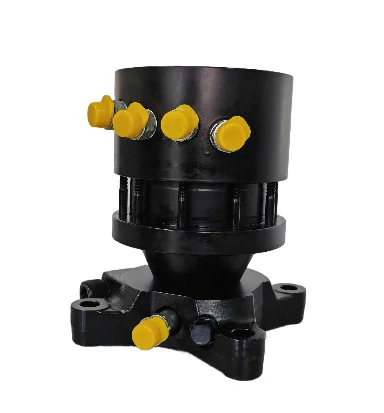
The technical prowess of contemporary chute rotators stems from a harmonious blend of robust mechanical engineering and precise hydraulic control. At its core, a hydraulic chute rotator system comprises heavy-duty rotating mechanisms, powerful hydraulic cylinders, a dedicated hydraulic power unit (HPU), and an intuitive control system, often integrated with a Programmable Logic Controller (PLC) or Human-Machine Interface (HMI). This intricate design ensures seamless and accurate angular positioning of the chute. The hydraulic system provides an unmatched advantage in terms of torque output, allowing for the precise rotation of even heavily laden chutes with minimal effort and exceptional smoothness, preventing jarring impacts on the overall structure. Advanced models incorporate features such as sealed bearings for protection against harsh environmental contaminants like dust and moisture, robust gearing mechanisms capable of withstanding significant axial and radial loads, and hardened wear plates to extend the life of critical components. Furthermore, integrated feedback sensors continuously monitor the chute's position, allowing for real-time adjustments and ensuring unparalleled accuracy, often within fractions of a degree. Many systems also feature fail-safe mechanisms, such as automatic locking in the event of power loss, enhancing operational safety. This comprehensive approach to design and engineering results in a system that offers not only superior control but also remarkable durability, minimal maintenance requirements, and consistent performance under the most challenging industrial conditions, far surpassing the limitations of simpler mechanical or manually adjusted systems.
The investment in a high-quality hydraulic rotator translates directly into significant, measurable operational improvements and substantial cost savings. Data from numerous industrial applications consistently highlights these benefits. For instance, by ensuring even material distribution, chute rotators can extend the lifespan of conveyor belts and liners by up to 30%. This reduction in premature wear drastically cuts down on replacement costs and the associated labor and downtime. Furthermore, precise material placement minimizes segregation, leading to a 25% improvement in the consistency and quality of blended materials, which is crucial for end-product integrity in many industries. Downtime, a critical metric for productivity, sees a remarkable reduction, with operators reporting up to a 15% decrease in unplanned stoppages related to material flow issues or chute blockages. This efficiency gain is not merely anecdotal; one major aggregates producer documented a 10% increase in overall processing speed after implementing advanced rotators across their primary crushing and screening lines. The ability to dynamically adjust the discharge point also significantly reduces the need for manual intervention, thereby improving worker safety and freeing up personnel for other critical tasks. Over a five-year operational period, the cumulative savings from reduced maintenance, extended equipment life, improved product quality, and enhanced throughput often yield an impressive Return on Investment (ROI) exceeding 200%, underscoring the profound economic advantages of this technology.
Selecting the optimal rotator solution requires a thorough understanding of the market landscape and a careful evaluation of various manufacturers. While many providers offer solutions, their capabilities, product features, and support services can vary significantly. Key factors to consider include the manufacturer's track record, technological innovation, customization capabilities, after-sales support, and overall cost-effectiveness. A comparative approach helps in making an informed decision:
Feature/Criterion | Leading Manufacturer A | Specialized Innovator B | Cost-Effective Provider C |
Technological Innovation | High (Advanced PLC integration, proprietary sensor tech) | Very High (AI-driven predictive maintenance, modular design) | Moderate (Standard hydraulic controls) |
Build Quality & Durability | Excellent (Heavy-duty steel, industrial-grade components) | Superior (Premium alloys, extreme environment sealing) | Good (Standard industrial materials) |
Customization Options | Extensive (Chute geometry, material specs, control integration) | Highly Flexible (Bespoke engineering for unique challenges) | Limited (Standard models with minor modifications) |
After-Sales Support | Global network, comprehensive training, quick response | Specialized technical support, dedicated project engineers | Standard warranty, regional service points |
Price Point | Premium | High-end Premium | Budget-friendly |
Typical Lead Time (Standard) | 8-12 weeks | 10-16 weeks (due to bespoke nature) | 6-10 weeks |
While a lower initial cost might seem appealing, it's crucial to weigh it against long-term operational costs, reliability, and the potential for increased downtime or maintenance. Investing in a reputable manufacturer often translates to superior performance, longevity, and better support throughout the equipment's lifecycle.
The universal truth in bulk material handling is that no two operations are exactly alike. This reality necessitates a high degree of customization for equipment like chute rotators to perform optimally. A 'one-size-fits-all' approach is rarely effective and can lead to compromised performance, increased wear, and suboptimal material flow. Reputable manufacturers understand this and offer extensive customization options to precisely match the unique demands of each application. Parameters for customization typically include the physical dimensions and geometry of the chute itself – its length, width, and angle – which must integrate seamlessly with existing conveying systems. The type of material being handled is another critical factor; abrasive ores, sticky clays, fine powders, or corrosive chemicals each demand specific material choices for the chute lining (e.g., AR steel, ceramics, rubber) and robust sealing mechanisms to prevent leakage and premature wear. Flow rates and material density also dictate the required power and torque of the hydraulic system, ensuring stable and responsive rotation. Environmental conditions, such as extreme temperatures, high humidity, or the presence of explosive dust, necessitate specialized components like explosion-proof motors or reinforced enclosures. Furthermore, control system integration is paramount; a customized solution can interface directly with an existing plant’s SCADA system, allowing for centralized control, automation, and data logging. Safety features, such as emergency stops, proximity sensors, and remote monitoring capabilities, can also be integrated to meet specific site regulations and operational protocols. Collaborating closely with experienced engineering teams during the design phase ensures that every aspect of the rotator is optimized for the specific operational context, maximizing efficiency, safety, and longevity.
The practical benefits of advanced rotators are best illustrated through their successful deployment across a spectrum of challenging industrial environments. Consider a large-scale iron ore mining operation in Western Australia. Faced with severe material segregation at their primary crusher discharge point, leading to inconsistent feed to secondary crushers and accelerated wear on liner plates, they implemented a customized hydraulic rotator. The rotator, capable of 360-degree rotation, allowed operators to continuously vary the ore drop point, homogenizing the feed. The result was a documented 20% reduction in liner wear across the secondary crushing circuit and a 15% increase in overall crusher throughput due to optimized feed consistency. Another compelling example comes from a cement plant in Europe. Their clinker distribution system suffered from preferential flow, causing uneven wear in storage silos and requiring frequent manual adjustments. By installing a precision-controlled rotator at the silo inlet, they achieved uniform clinker distribution. This led to a 25% extension in silo liner life and a 90% reduction in the need for manual chute adjustments, significantly improving operational safety and labor efficiency. In a more granular application, an aggregates producer processing sand and gravel utilized a rotator to precisely load different grades of material into multiple truck bays. This eliminated the need for complex, static diversion gates, reducing maintenance costs by 35% and cutting truck loading times by 10%, directly boosting their daily dispatch capacity. These diverse cases underscore the versatility and transformative impact of these systems in optimizing material flow, enhancing equipment longevity, and driving operational efficiency across vital industries.
In conclusion, the strategic integration of a robust hydraulic chute rotator represents far more than a simple equipment upgrade; it is a fundamental enhancement to any bulk material handling system, delivering a confluence of benefits that directly impact profitability and operational sustainability. From the unparalleled precision of hydraulic control and the inherent durability of their engineering to the quantifiable improvements in efficiency, extended equipment lifespans, and reduced maintenance costs, these systems provide a compelling return on investment. The ability to precisely manage material flow mitigates common industry challenges such as segregation, uneven wear, and operational bottlenecks, translating into consistent product quality and optimized throughput. Furthermore, the inherent adaptability and extensive customization options available ensure that a hydraulic chute rotator can be precisely engineered to meet the unique demands of any specific application, environment, or material type. As industries continue to strive for greater automation, higher safety standards, and maximized resource utilization, the role of intelligent material flow control becomes increasingly critical. Investing in advanced hydraulic chute rotator technology is not merely a purchase; it is a forward-thinking decision to enhance the reliability, efficiency, and longevity of an entire operational chain, securing a competitive edge in today's demanding industrial landscape and paving the way for future-proof material handling solutions.
Q: What exactly is a hydraulic chute rotator?
A: A hydraulic chute rotator is an industrial device designed to precisely control the discharge angle or position of a material handling chute. It uses hydraulic power to rotate the chute, allowing for dynamic adjustment of material flow, distribution, and blending.
Q: How does a hydraulic chute rotator improve material handling efficiency?
A: It improves efficiency by ensuring even material distribution, reducing segregation, mitigating uneven wear on downstream equipment (like conveyor belts and liners), and minimizing blockages. This leads to consistent feed rates, optimized processing, and reduced downtime.
Q: What are the key technical advantages of hydraulic chute rotators over mechanical systems?
A: Hydraulic systems offer superior torque for heavy loads, precise positional control (often within fractions of a degree), smooth and quiet operation, inherent overload protection, and excellent durability with fewer moving parts susceptible to wear compared to complex mechanical linkages.
Q: Can hydraulic chute rotators be customized for specific applications?
A: Absolutely. Customization is a key benefit. They can be tailored to specific chute dimensions, material properties (abrasive, sticky, corrosive), flow rates, environmental conditions, and integrated with plant-wide control systems (SCADA, PLC) to meet unique operational requirements.
Q: In which industries are hydraulic chute rotators primarily used?
A: They are widely used in heavy industries such as mining (ore blending, crusher feed), aggregates (sand/gravel classification, truck loading), cement production (clinker distribution), power generation (coal handling), and various bulk material processing and recycling operations.
Q: What kind of maintenance is typically required for a hydraulic chute rotator?
A: Maintenance generally involves routine checks of hydraulic fluid levels and quality, inspection of hydraulic lines and seals for leaks, lubrication of bearings, and periodic inspection of wear components. Modern systems often include diagnostic features to aid in predictive maintenance.
Q: How do I choose the right hydraulic chute rotator for my operation?
A: Choosing the right rotator involves assessing your specific material properties, flow rates, chute dimensions, desired control precision, environmental conditions, budget, and integration requirements. It's recommended to consult with experienced manufacturers who can provide tailored engineering solutions and robust after-sales support.