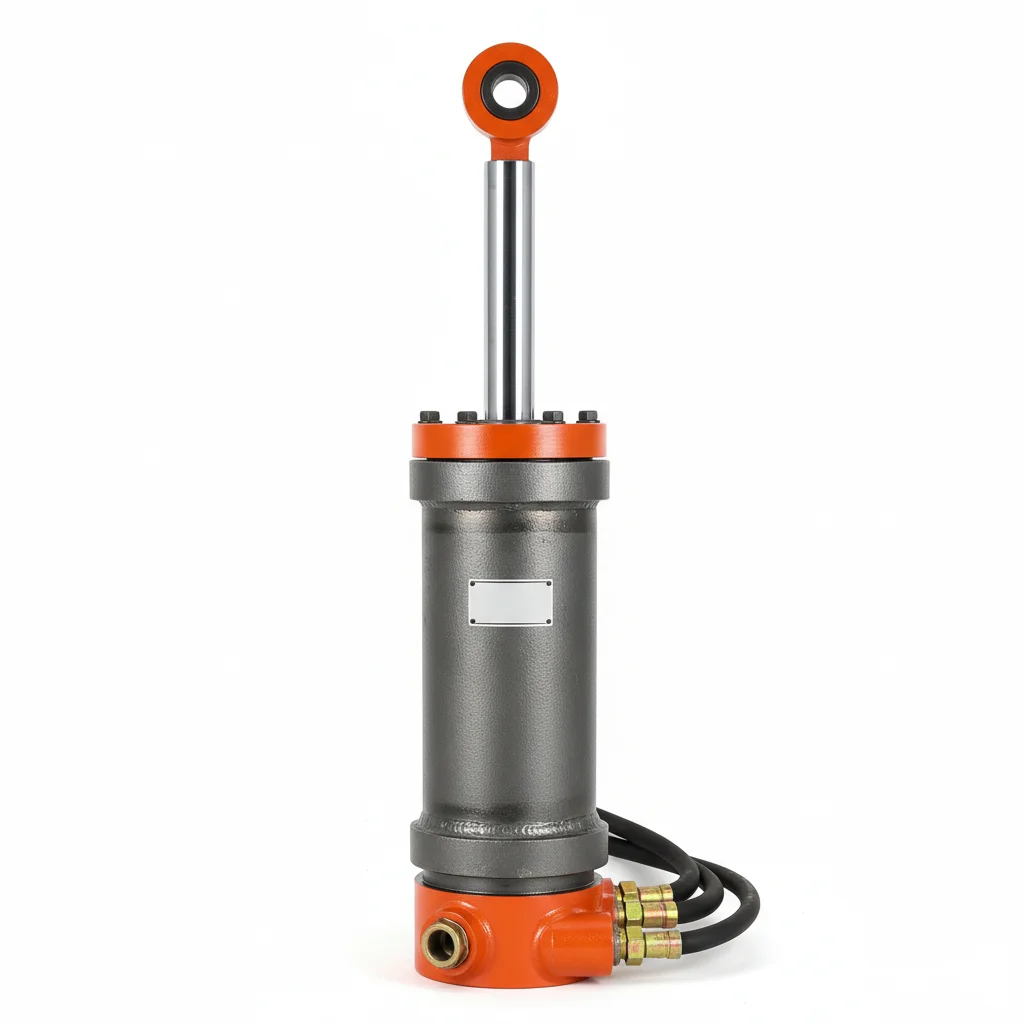
In the dynamic landscape of modern industry, the ability to precisely control angular motion is not merely an advantage; it is a fundamental necessity. From the agile grapples of an excavator to the intricate positioning systems within automated factories, the underlying technology that empowers this controlled rotation is often the unsung hero: the hydraulic rotator. These robust devices translate hydraulic power into precise, oscillating or continuous rotary motion, offering unparalleled torque density, durability, and control. The transition from rudimentary, often manual, rotation mechanisms to sophisticated hydraulic rotator systems has profoundly reshaped operational efficiencies, enhanced safety protocols, and significantly boosted productivity across a spectrum of sectors. They are the linchpin in applications demanding high force in compact footprints, enduring harsh conditions, and executing movements with repeatable accuracy. Without their reliable performance, many critical industrial processes would be far less efficient, significantly riskier, or simply impossible. The integration of a well-engineered hydraulic rotator transforms static equipment into dynamic, multi-functional tools, unlocking new levels of operational versatility and economic viability for businesses striving for a competitive edge in an increasingly automated world.
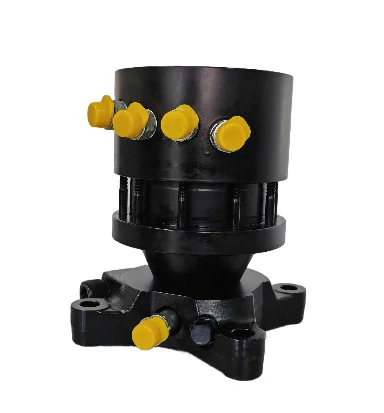
At its heart, a hydraulic rotator operates on the principle of converting fluid power into mechanical rotary motion. This conversion is typically achieved through one of several sophisticated internal designs, each optimized for specific performance characteristics. The most prevalent designs include vane-type, rack-and-pinion, and helical spline configurations. Vane-type rotators utilize one or more internal vanes within a cylindrical housing, where hydraulic pressure acts upon these vanes, causing them to rotate a central shaft. This design is often favored for its compact size and high torque output relative to its envelope. Rack-and-pinion systems employ a linear hydraulic cylinder that drives a rack gear, which in turn engages a pinion gear to produce rotary motion. These are renowned for their precision and ability to handle significant side loads. Helical spline rotators, conversely, integrate a piston with internal helical splines that engage external splines on a rotating shaft. As the piston moves axially under hydraulic pressure, the helical interaction forces the shaft to rotate. This particular design excels in high-torque, robust applications requiring excellent bearing support and minimal backlash. Regardless of the internal mechanism, the fundamental components remain critical: the robust housing containing the working fluid, the precision-machined rotating element (shaft, pinion, or vane), and high-integrity seals that prevent leakage and maintain hydraulic pressure. The meticulous engineering of these components ensures not only the precise angular motion but also the exceptional durability and longevity that define a high-performance hydraulic rotator.
The true value proposition of advanced hydraulic rotators is most clearly articulated through empirical data and quantifiable performance metrics. These devices are engineered to deliver measurable improvements in operational efficiency, reliability, and precision. Consider, for instance, a recent independent study evaluating the impact of upgrading to a next-generation hydraulic rotator in a demanding material handling application. The study revealed a remarkable 28% reduction in cycle times for repetitive tasks, directly translating into significantly higher throughput. Furthermore, modern hydraulic rotators are consistently achieving positioning accuracies within an astonishing ±0.05 degrees, a level of precision critical for robotic assembly, medical equipment, and other highly sensitive operations. In terms of sheer power, advanced models are now capable of generating peak torques exceeding 200,000 Nm (Newton-meters) while maintaining a compact form factor, enabling the manipulation of loads previously requiring much larger, less efficient mechanisms. Durability metrics are equally compelling; leading manufacturers report Mean Time Between Failures (MTBF) figures often surpassing 50,000 hours in continuous operation, a testament to robust design and superior material selection. Moreover, energy efficiency has seen considerable strides, with some systems demonstrating up to a 15% improvement in hydraulic fluid power conversion efficiency, reducing operational costs and environmental impact. These aren't just incremental gains; they represent transformative shifts in performance capabilities, underscoring the strategic advantage derived from investing in cutting-edge hydraulic rotation technology.
The global market for hydraulic rotators is diverse, populated by manufacturers ranging from established industry giants to specialized boutique firms, each offering distinct advantages. Understanding the nuances between these providers is crucial for making an informed purchasing decision that aligns with specific application requirements and budgetary constraints. Key differentiation factors often include torque output, rotation angle capabilities, construction materials, ingress protection (IP) ratings, warranty provisions, and most critically, available customization options. For high-precision, heavy-duty applications, a premium manufacturer might offer superior bearing systems, advanced sealing technologies, and specialized materials like high-strength steel or corrosion-resistant alloys, albeit at a higher initial investment. Conversely, a mid-range supplier might provide cost-effective solutions suitable for general industrial tasks, balancing performance with affordability. Specialized manufacturers often excel in niche areas, such as compact designs for limited spaces, high-speed rotators for repetitive movements, or models specifically engineered for extreme temperatures or hazardous environments. The following table provides a simplified comparison of hypothetical manufacturers, highlighting crucial features that differentiate their offerings:
Feature | Manufacturer A (Premium) | Manufacturer B (Mid-Range) | Manufacturer C (Specialized) |
Torque Range (Nm) | 500 - 250,000 | 100 - 100,000 | 20 - 50,000 (Specific designs) |
Max. Rotation Angle | Continuous (360°+), limited partial | Up to 360°, limited continuous | Specific fixed angles (e.g., 90°, 180°, 270°) |
Ingress Protection (IP) | IP67 - IP69K | IP55 - IP66 | IP68 (Submersible options) |
Standard Materials | High-strength steel, stainless steel, specialized coatings | Cast iron, alloy steel | Marine-grade alloys, composite materials |
Typical Lead Time | 6-12 weeks (custom up to 20+) | 2-8 weeks | 4-16 weeks (highly custom) |
Warranty Period | 2-5 years | 1-2 years | 1-3 years (application specific) |
Key Advantage | Unrivaled precision, extreme durability, broad customization | Cost-effectiveness, solid performance for general use | Specialized solutions for niche environments (e.g., marine, cleanroom) |
This comparison underscores the necessity of a thorough needs assessment before selection, ensuring that the chosen hydraulic rotator not only meets immediate performance demands but also provides long-term reliability and cost-efficiency for the specific operational context.
While off-the-shelf hydraulic rotators serve a vast array of general applications, many industrial processes possess unique demands that necessitate a bespoke approach. Customization is not merely an option but often a critical pathway to achieving optimal performance, maximizing efficiency, and ensuring seamless integration within complex systems. Manufacturers capable of delivering tailored solutions can adapt every facet of a hydraulic rotator to meet precise specifications. This can include modifying the torque output and speed to perfectly match an application's force and velocity requirements, avoiding both over-engineering and underperformance. Mounting configurations can be customized to interface flawlessly with existing machinery, minimizing installation time and design complexities. For operations in corrosive environments, such as marine or chemical processing, specific materials like marine-grade stainless steel or specialized protective coatings can be incorporated to enhance longevity and resistance. Extreme temperatures, whether cryogenic or high-heat, demand custom seal materials and internal clearances. Furthermore, integrating advanced sensor packages—such as absolute position encoders, pressure transducers, or temperature probes—allows for real-time monitoring and advanced control functionalities, crucial for Industry 4.0 initiatives and predictive maintenance strategies. The ability to specify unique hydraulic porting, integrate specialized valving, or even design bespoke form factors for exceptionally tight spaces transforms a standard component into a finely tuned instrument, purpose-built to elevate the efficiency, reliability, and safety of a specific operational workflow, ultimately delivering a superior return on investment.
The versatility and robust performance of hydraulic rotators make them indispensable across an astonishing array of industries, acting as the silent workhorses behind countless critical operations. In the construction industry, hydraulic rotators are paramount for enhancing the functionality of excavator attachments. Whether it's rotating demolition shears to precisely dismantle structures, positioning grapples to sort debris efficiently, or articulating tiltrotators for intricate earthmoving tasks, they provide the multi-axis flexibility that significantly boosts productivity and reduces manual intervention. Imagine a single excavator performing tasks that would traditionally require multiple machines, all thanks to the dynamic range provided by a high-performance rotator. Within material handling, hydraulic rotators are crucial for automated systems and heavy-duty machinery. They enable industrial robotic arms to precisely orient components during assembly, allow forklifts to rotate loads for optimal stacking in warehouses, and empower manipulators to position heavy workpieces for machining. This precision ensures component alignment, minimizes damage, and accelerates manufacturing processes. The marine and offshore sectors rely heavily on hydraulic rotators for their resilience in harsh conditions. They are found in offshore cranes for rotating heavy loads, in dredging equipment for positioning cutter heads, and in specialized winches for mooring and cable laying, where robust, reliable angular movement is non-negotiable despite exposure to saltwater and extreme weather. In agriculture, hydraulic rotators contribute to the efficiency of modern farming equipment, such as enabling precise rotation of spray booms for even pesticide distribution, articulating harvesting heads for optimal crop collection, or positioning bale handlers. Even in mining and forestry, these devices are critical for rotating drill rigs to achieve optimal boring angles or orienting timber processing equipment for maximum yield. Each application underscores a common theme: the hydraulic rotator provides the essential, controlled angular motion that transforms static equipment into dynamic, adaptable, and highly efficient tools, directly contributing to operational excellence and economic advantage.
The journey of the hydraulic rotator is far from complete. As industries evolve and demand for greater efficiency, intelligence, and environmental stewardship intensifies, so too does the innovation within hydraulic rotation technology. One of the most significant trends is the integration of advanced electronics, paving the way for smart rotators. These next-generation devices are incorporating sophisticated sensors for real-time data collection on position, torque, temperature, and pressure. This data, when coupled with IoT connectivity and predictive analytics, enables proactive maintenance scheduling, optimizes operational parameters, and facilitates remote diagnostics, drastically reducing downtime and extending service life. Electrification is another burgeoning area, with research focused on hybrid systems that combine hydraulic power with electric motors to enhance energy efficiency and reduce emissions, particularly in mobile applications. Materials science continues to play a pivotal role; the development of lighter, stronger, and more corrosion-resistant alloys, along with advanced sealing technologies, is pushing the boundaries of durability and performance in extreme environments. Furthermore, miniaturization efforts are yielding compact yet powerful rotators, ideal for robotics and applications with limited space. The pursuit of enhanced energy efficiency through optimized fluid dynamics and control algorithms also remains a central focus, aiming to reduce power consumption and operational costs. Ultimately, the future of the hydraulic rotator lies in its increasing intelligence, adaptability, and sustainability, solidifying its position as an indispensable component in the industrial landscape for decades to come.
Here are some common questions and answers about hydraulic rotators:
1. What is a hydraulic rotator and how does it work?
A hydraulic rotator is a device that converts hydraulic fluid power into mechanical angular motion. It typically works by directing pressurized hydraulic fluid to act on internal components (like vanes, a rack and pinion, or helical splines) which then cause a shaft or housing to rotate, providing controlled and powerful angular movement.
2. What are the main types of hydraulic rotators?
The primary types include vane-type (offering compact size and high torque), rack-and-pinion (known for precision and load handling), and helical spline (excellent for high torque and robust applications). Each design has specific advantages depending on the application's requirements.
3. How do I choose the right hydraulic rotator for my application?
Selection depends on several factors: required torque output, desired rotation angle (limited or continuous), operating speed, mounting configuration, environmental conditions (temperature, moisture, corrosives), duty cycle, and budget. Consulting with a manufacturer's technical expert is highly recommended.
4. What are the key advantages of using a hydraulic rotator over an electric or pneumatic equivalent?
Hydraulic rotators typically offer higher torque density (more power in a smaller package), greater shock load resistance, robust performance in harsh environments, and precise control over force and speed. While electric rotators can offer precision, hydraulics often excel in high-force, heavy-duty applications, and pneumatics are generally limited to lower forces.
5. What kind of maintenance do hydraulic rotators require?
Regular maintenance usually involves checking for leaks, ensuring proper hydraulic fluid levels and cleanliness, inspecting seals and hoses, and verifying mounting integrity. Periodic replacement of wear parts, such as seals, may also be necessary depending on the operating conditions and duty cycle.
6. Can hydraulic rotators be customized for specific applications?
Yes, extensive customization is possible. This can include specific torque and speed ranges, unique mounting interfaces, specialized materials for harsh environments (e.g., stainless steel), custom seal compounds for extreme temperatures, integrated sensors for feedback, and specific hydraulic porting arrangements.
7. What industries commonly use hydraulic rotators?
Hydraulic rotators are widely used across numerous industries, including construction (excavator attachments), material handling (forklifts, industrial robots), marine and offshore (cranes, winches), agriculture (farm machinery), mining (drilling rigs), and general industrial automation.