In the realm of industrial automation and heavy machinery, precision and controlled power are paramount. Among the myriad of hydraulic components, the hydraulic cylinder 10 inch stroke emerges as a uniquely versatile and indispensable workhorse. This specific stroke length, while seemingly compact, offers an optimal balance of operational speed, force generation, and spatial efficiency. Its importance is particularly pronounced in applications requiring moderate linear displacement with significant thrust, where longer strokes would be inefficient or impractical, and shorter strokes insufficient. Industries ranging from material handling and agricultural equipment to specialized manufacturing and construction frequently leverage the distinct capabilities of a hydraulic cylinder with a 10-inch stroke. This article delves into the inherent advantages, technical specifications, and widespread utility of these critical components, providing a comprehensive guide for engineers, procurement managers, and industry professionals seeking to optimize their hydraulic systems. Understanding the nuances of this specific cylinder type is crucial for enhancing operational efficiency, ensuring safety, and achieving superior performance in demanding environments. The precise control offered by a 10-inch stroke cylinder facilitates highly repeatable movements, which is a cornerstone for automated processes and applications where consistent operation directly translates to productivity and product quality.
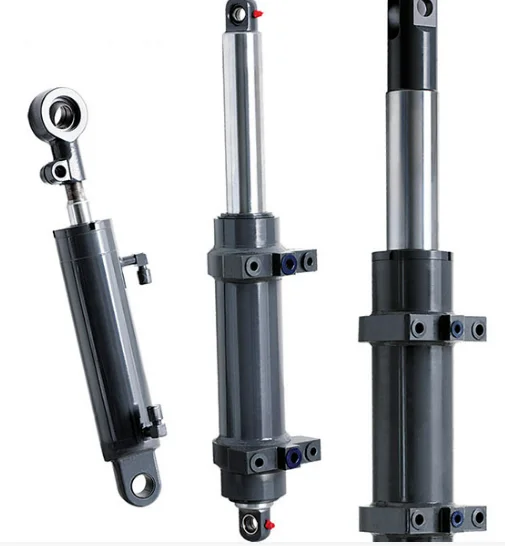
The engineering behind a high-quality hydraulic cylinder, particularly one designed for a 10-inch stroke, is a testament to meticulous design and material science. These cylinders are not merely pieces of metal; they are precision instruments built to withstand extreme pressures and repetitive cycles. Key technical advantages stem from their robust construction, typically featuring heavy-duty steel or cast iron bodies, chrome-plated rods for corrosion resistance and reduced friction, and advanced sealing technologies. For a 10-inch stroke, bore sizes can vary significantly, from compact designs under 1.5 inches for intricate tasks to larger bores exceeding 6 inches for substantial force requirements. The rod diameter is meticulously matched to the bore size and expected load, ensuring structural integrity and preventing buckling. Furthermore, critical elements such as robust piston designs, hardened steel pins, and precision-machined ports contribute to longevity and leak-free operation. Modern cylinders often incorporate advanced composite seals that provide superior performance across a wider temperature range and with various hydraulic fluids, minimizing downtime associated with seal failure. Mounting options—including clevis, trunnion, flange, and foot mounts—are equally crucial for integrating the cylinder seamlessly into diverse mechanical systems, optimizing load distribution and ensuring stable operation. This careful attention to every component ensures that the cylinder performs reliably under sustained operational stress, making it a cornerstone of dependable hydraulic power.
The true value of a hydraulic cylinder with a 10-inch stroke becomes evident when examining its performance metrics and the tangible impact on operational efficiency. These cylinders are designed for high force-to-size ratios, meaning they can exert substantial force despite their relatively compact stroke length. For instance, a 4-inch bore cylinder operating at 3000 PSI can generate over 37,000 pounds of pushing force—a formidable output for a component displacing only 10 inches. This power, combined with controlled speed, translates directly into enhanced productivity. Consider a production line where a 10-inch stroke cylinder is used for precise clamping or ejection:
· Cycle Time Reduction: With typical extension/retraction speeds of 6-12 inches per second, a 10-inch stroke cylinder can complete a full cycle in under 2 seconds, potentially increasing throughput by 15-20% compared to slower, less optimized mechanisms.
· Energy Efficiency: Modern cylinder designs, coupled with efficient hydraulic power units, can achieve up to 90% mechanical efficiency, minimizing energy waste and reducing operational costs by 5-10% annually for intensive applications.
· Reduced Downtime: The robust construction and advanced sealing systems in quality cylinders often extend mean time between failures (MTBF) beyond 10,000 operating hours, significantly cutting maintenance interventions and associated costs by up to 25%.
These data points underscore how a well-specified 10-inch stroke hydraulic cylinder is not just a component, but a strategic investment that delivers quantifiable improvements in productivity, energy conservation, and system reliability. Its precise, repeatable motion is critical in scenarios demanding accuracy, such as automated assembly or precision lifting, where even minor variations can lead to defects or operational bottlenecks.
Choosing the right manufacturer for your hydraulic cylinder 10 inch stroke is a critical decision that impacts long-term performance, reliability, and cost of ownership. The market is populated by numerous suppliers, each with varying strengths in terms of product quality, customization capabilities, lead times, and after-sales support. A thorough evaluation process is essential to align the cylinder's specifications with your application's unique demands. Key factors to consider include the manufacturer's reputation, adherence to international standards (e.g., ISO, SAE), material quality, manufacturing precision, and warranty offerings. Below is a hypothetical comparison table illustrating how different manufacturers might stack up:
Feature/Criterion | Manufacturer A (Premium) | Manufacturer B (Mid-Range) | Manufacturer C (Economy) |
Material Quality | High-grade alloy steels, superior chrome plating | Standard industrial steels, good chrome plating | Basic carbon steel, functional plating |
Sealing Technology | Advanced composite seals (low friction, wide temp range) | Standard polyurethane/nitrile seals | Basic rubber seals |
Customization Options | Extensive (sensors, coatings, specific ports) | Moderate (rod ends, basic modifications) | Limited (standard configurations only) |
Warranty Period | 3-5 years | 1-2 years | 6 months - 1 year |
Lead Time (Standard) | 2-4 weeks | 4-6 weeks | 6-8 weeks |
Price Range | $$$ | $$ | $ |
Certifications | ISO 9001, CE, ATEX options | ISO 9001 | Basic quality checks |
Beyond these quantitative metrics, consider technical support, responsiveness to inquiries, and the ability to provide detailed engineering drawings. A manufacturer with a strong track record and robust engineering support can prove invaluable, especially for complex or mission-critical applications where failure is not an option. Engaging with suppliers who offer comprehensive testing and quality assurance protocols is also vital to guarantee the cylinder's performance meets exacting standards.
While standard hydraulic cylinders offer broad utility, many industrial applications present unique challenges that necessitate tailored solutions. The ability to customize a hydraulic cylinder 10 inch stroke allows engineers to precisely match the component to the exact operational environment and performance requirements, thereby optimizing system efficiency and longevity. Customization options extend far beyond simple bore and rod diameters. They encompass a spectrum of modifications designed to enhance performance in specific conditions:
· Special Coatings: For corrosive or abrasive environments, options like ceramic coatings, nickel plating, or specialized paints can significantly extend cylinder life and reduce maintenance.
· Integrated Sensors: Position sensors (LVDT, magnetostrictive) can be seamlessly integrated into the cylinder design, providing real-time feedback for precise motion control, synchronization, and diagnostic purposes in automated systems.
· Specific Porting and Valve Integration: Custom port configurations, manifold mounting options, or even integrated control valves can simplify plumbing, reduce leak points, and optimize response times.
· Rod End Configurations: Beyond standard clevis or eye ends, custom threaded ends, spherical bearings, or specialty attachments can be designed to interface perfectly with the driven mechanism.
· Material Selection: For extreme temperatures, high-purity applications, or specific fluid compatibility, alternative materials such as stainless steel, bronze, or specific high-performance polymers can be specified for the cylinder body, rod, piston, and seals.
· Cushioning and Damping: Adjustable or fixed cushioning at the end of the stroke can prevent impact damage, reduce noise, and extend the lifespan of the cylinder and surrounding machinery.
Embracing customization ensures that the cylinder is not just a component, but an integral, optimized part of a larger, highly efficient system. This proactive approach to design minimizes compromises, leading to superior operational performance, reduced wear, and ultimately, a better return on investment over the cylinder's operational lifespan.
The versatility of a hydraulic cylinder 10 inch stroke is best illustrated through its wide range of applications across various industries. Its balance of power and moderate displacement makes it ideal for tasks requiring precise, controlled linear movement without excessive reach. In material handling, these cylinders are routinely found in forklift attachments, conveyor systems for pushing or diverting products, and scissor lifts, providing the necessary lifting and tilting power for ergonomic and efficient operations. A typical example would be a palletizer using a 10-inch stroke cylinder to precisely push a stack of goods onto a conveyor, ensuring smooth, consistent product flow. In agricultural machinery, they are crucial for operating gates, adjusting implements on tractors, or controlling steering mechanisms, where robust and reliable action is paramount in harsh outdoor conditions. For instance, a small agricultural gate might use a 10-inch stroke cylinder to open and close consistently. Industrial automation benefits immensely, with these cylinders used in clamping jigs, assembly line presses, molding machines, and automated welding cells, where their repeatable accuracy is key to product consistency and quality. A common application is in injection molding machines for ejecting finished parts or closing molds with controlled force. In the construction industry, they power compact excavators, small loaders, and specialized lifting equipment, performing tasks like bucket tilting, steering, or stabilization. Even in niche applications such as waste compaction equipment or theatrical stage automation, the 10-inch stroke cylinder provides the necessary force and controlled motion. These diverse examples underscore the indispensable role these cylinders play in modern industry, driving efficiency and enabling complex mechanical operations with precision and reliability.
Investing in the correct hydraulic cylinder 10 inch stroke is more than a procurement decision; it is a strategic choice that profoundly impacts long-term operational efficiency, safety, and ultimately, your return on investment (ROI). A carefully selected and properly maintained cylinder minimizes unexpected downtime, reduces maintenance costs, and ensures consistent, high-quality output. The cumulative benefits—from energy savings due to higher efficiency to increased productivity driven by faster cycle times—far outweigh the initial component cost. To maximize ROI, consider not only the upfront price but also the total cost of ownership (TCO), which includes operational expenses, energy consumption, maintenance, and potential productivity losses due to breakdowns. Proactive maintenance, such as regular fluid checks, seal inspections, and proper lubrication, can significantly extend the lifespan of your hydraulic cylinder with a 10-inch stroke, pushing its MTBF beyond typical expectations. Looking to the future, the integration of smart sensors and predictive maintenance technologies into these cylinders represents an evolving trend. This allows for real-time performance monitoring and early detection of potential issues, transforming reactive repairs into scheduled, preventative actions. Choosing a reputable manufacturer known for quality, support, and customization capabilities ensures that you acquire a durable and adaptable component. By making informed decisions and prioritizing long-term value, businesses can harness the full potential of these essential hydraulic components, securing a competitive edge and robust operational performance for years to come.
Q: What are the primary advantages of a 10-inch stroke hydraulic cylinder compared to other stroke lengths?
A: A 10-inch stroke hydraulic cylinder offers an excellent balance between speed, force, and compact design. It's ideal for applications requiring moderate linear displacement with significant power, where longer strokes would be cumbersome or inefficient, and shorter strokes insufficient. This specific length often optimizes cycle times and fits well in space-constrained environments.
Q: In what common industries is a hydraulic cylinder 10 inch stroke most frequently utilized?
A: These cylinders are widely used across various sectors including material handling (forklifts, conveyors), industrial automation (clamping, pressing, ejection), agricultural machinery (implement adjustment, steering), construction (compact loaders, excavators), and specialized manufacturing processes requiring precise, repeatable short-distance movements.
Q: Can a 10-inch stroke hydraulic cylinder be customized for specific applications?
A: Absolutely. Customization is a significant advantage. Options include special coatings for harsh environments, integrated position sensors for precise control, unique rod end configurations, specialized porting, and material selection for extreme temperatures or fluid compatibility. This ensures optimal performance tailored to specific operational needs.
Q: What factors should I consider when determining the bore size for a 10-inch stroke cylinder?
A: The bore size primarily determines the force output. You need to consider the maximum force required for your application, the available system pressure, and any spatial constraints. Larger bores generate more force at a given pressure, but also result in a larger, heavier cylinder and potentially higher fluid consumption.
Q: How does the choice of seals impact the performance and lifespan of a hydraulic cylinder 10 inch stroke?
A: Seals are critical for preventing leaks and maintaining efficiency. High-quality seals (e.g., advanced polyurethane or composite materials) offer better resistance to wear, temperature extremes, and chemical degradation, leading to extended cylinder life, reduced friction, and lower maintenance requirements compared to basic seal materials.
Q: What are the typical pressure ratings for a hydraulic cylinder 10 inch stroke?
A: Pressure ratings vary significantly based on the cylinder's construction and intended application. Industrial-grade 10-inch stroke cylinders commonly range from 2000 PSI (140 bar) to 5000 PSI (345 bar) for heavy-duty applications. Mobile hydraulic cylinders might operate at slightly lower pressures, while specialized industrial units can exceed these ratings.
Q: What maintenance practices are recommended to maximize the lifespan of a 10-inch stroke hydraulic cylinder?
A: Regular maintenance includes inspecting seals for wear or leaks, checking for rod damage (scratches, pitting), ensuring proper alignment to prevent side loading, monitoring hydraulic fluid cleanliness and level, and periodically checking mounting hardware for tightness. Using the correct hydraulic fluid and operating within specified pressure and temperature limits are also crucial.