In the demanding world of industrial machinery and mobile equipment, the ability to generate controlled, bidirectional force is paramount. This fundamental requirement is expertly fulfilled by the double sided hydraulic cylinder, a cornerstone component in countless applications where precise push and pull operations are essential. Unlike its single-acting counterpart, which extends under hydraulic pressure and retracts via an external force (such as gravity or a spring), the double-acting cylinder utilizes hydraulic fluid to power both its extension and retraction strokes. This inherent versatility and superior control make it indispensable across sectors ranging from heavy construction and material handling to advanced manufacturing and marine engineering. Understanding the intricate design, robust construction, and operational advantages of these cylinders is crucial for engineers, designers, and operators seeking to optimize system performance, enhance safety, and achieve unparalleled operational efficiency. This deep dive will explore the technical intricacies, performance benchmarks, customization avenues, and real-world impact of these workhorses of modern hydraulics, ensuring a comprehensive understanding of their pivotal role in today's sophisticated mechanical systems.
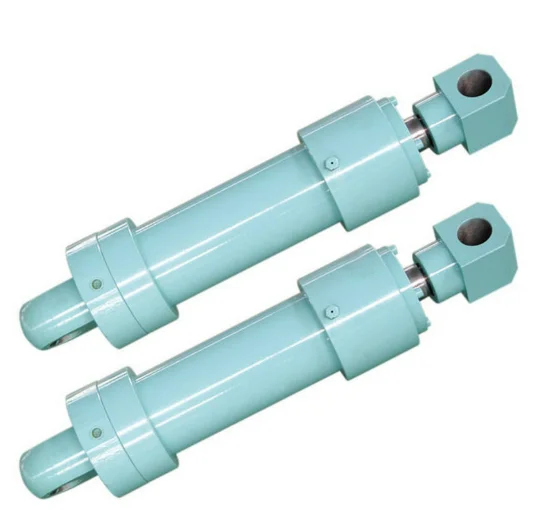
At its heart, a double-sided hydraulic cylinder is a remarkably efficient device for converting hydraulic pressure into linear mechanical force. The fundamental design comprises a cylindrical barrel, a piston, and a piston rod. What sets the double-acting cylinder apart is the strategic placement of hydraulic ports on both sides of the piston. When pressurized fluid is directed to one side, it forces the piston to move, driving the rod either out of or into the cylinder barrel. Simultaneously, fluid on the opposing side is allowed to return to the reservoir, completing the cycle. This symmetrical application of force is a significant technical advantage, enabling precise control over movement direction and speed, which is often unachievable with single-acting designs. Key technical attributes contributing to their superiority include:
· Symmetrical Force Generation: While the effective area on the rod side is slightly less due to the rod's presence, the cylinder is designed to deliver substantial force in both directions, making it ideal for tasks requiring consistent push and pull capabilities.
· Enhanced Control: The ability to hydraulically control both strokes provides engineers with greater command over positioning, speed, and acceleration, critical for precision applications.
· Robust Construction: Typically manufactured from high-grade steel, these cylinders are built to withstand immense pressures and demanding operational cycles. Components like honed bores, chrome-plated rods, and high-performance seals contribute to their long service life and reliability.
· Versatile Mounting Options: A wide array of mounting configurations – including clevis, trunnion, flange, and foot mounts – allows for seamless integration into diverse machinery designs, optimizing space and load distribution.
· Advanced Sealing Technologies: Modern double-acting cylinders often incorporate sophisticated sealing systems, such as PTFE seals or advanced polyurethane compounds, to minimize leakage, reduce friction, and enhance performance across varying temperatures and pressures.
These features collectively underscore the technical prowess and inherent reliability that make double-sided hydraulic cylinders a preferred choice for complex and critical hydraulic systems.
The operational impact of double-sided hydraulic cylinders extends far beyond mere force generation; they are instrumental in achieving significant improvements in overall system performance, efficiency, and reliability. The ability to precisely control motion in two directions translates directly into measurable benefits. For instance, in an industrial press application, the rapid and controlled retraction offered by a double-acting cylinder can lead to a demonstrable increase in cycle times, often boosting productivity by 20% to 30% compared to systems relying on gravity or spring return. This acceleration in operational speed directly impacts throughput and profitability.
Furthermore, these cylinders contribute substantially to energy efficiency. By actively driving the load in both directions, they minimize wasted energy and ensure that hydraulic power is optimally utilized. Consider a heavy lifting application where a double-acting cylinder can execute both the lift and controlled descent using hydraulic pressure, leading to an estimated 15% reduction in overall power consumption due as active control prevents uncontrolled energy dissipation. Their robust design, featuring precision-machined components and advanced sealing solutions, also translates into extended maintenance intervals and reduced downtime. Operators report that cylinders from reputable manufacturers consistently achieve service lives exceeding industry averages, often requiring 25% fewer routine maintenance interventions over a five-year period, resulting in significant operational cost savings.
The consistency and repeatability of force output provided by double-acting cylinders are also critical for processes requiring high precision. In automation and robotics, the ability to accurately position heavy components with sub-millimeter precision reduces errors and scrap rates, enhancing overall product quality. These tangible improvements in speed, energy efficiency, reliability, and precision collectively highlight the profound positive impact that well-engineered double-sided hydraulic cylinders have on industrial and mobile equipment performance.
The market for double-sided hydraulic cylinders is vast and diverse, populated by manufacturers ranging from global industrial giants to specialized boutique firms. Each segment caters to specific application needs, performance expectations, and budgetary constraints. Understanding the nuanced differences between these providers is essential for selecting the optimal cylinder for a given project. While specific brand names are less important than the characteristics they represent, we can broadly categorize manufacturers by their typical offerings and competitive advantages:
Attribute | Standard Industrial Manufacturer | High-Performance / Specialized Manufacturer | Heavy-Duty / Mobile Equipment Manufacturer |
Force Range | Medium to High (up to 3000 PSI) | Very High to Ultra-High (4000+ PSI) | High (2500-4500 PSI, shock resistant) |
Precision & Control | Good for general industrial use | Exceptional (sub-millimeter positioning) | Robust, reliable control in harsh environments |
Durability & Lifespan | Excellent for routine operations | Superior (materials, coatings for extreme cycles) | Extreme (designed for impact, continuous duty) |
Customization Options | Moderate (standard modifications) | Extensive (full bespoke engineering) | Moderate to Extensive (application-specific) |
Typical Lead Time | Standard (4-8 weeks) | Longer (8-16+ weeks for custom designs) | Standard to Longer (6-12 weeks) |
Price Point | Mid-range, cost-effective | Premium, higher initial investment | Mid to Premium, value for ruggedness |
Target Applications | General manufacturing, automation, presses | Aerospace, test rigs, medical, precision robotics | Construction, mining, agriculture, marine, forestry |
When evaluating potential suppliers, consider their reputation for quality, consistency in manufacturing, availability of spare parts, and the robustness of their technical support. A manufacturer with a strong track record in your specific industry often brings invaluable application expertise, ensuring that the chosen double-sided hydraulic cylinder is not just a component, but a perfectly integrated solution.
While many applications can be served by off-the-shelf double-sided hydraulic cylinders, a significant proportion of industrial and mobile equipment demands custom-engineered solutions. This is where the expertise of hydraulic specialists truly shines, crafting cylinders precisely matched to unique operational parameters and environmental challenges. Customization ensures optimal performance, extends operational lifespan, and often leads to significant long-term cost savings by perfectly fitting the application's needs rather than compromising with a standard unit. Key aspects that frequently necessitate custom design include:
· Specific Stroke Length and Bore/Rod Diameters: Beyond standard sizes, unique equipment geometries or force requirements may dictate non-standard dimensions.
· Specialized Mounting Configurations: Custom clevis designs, trunnion pivots, or flange patterns can be engineered to integrate seamlessly with existing machinery frameworks, ensuring proper load distribution and alignment.
· Material Selection: For corrosive environments (e.g., marine, chemical processing), stainless steel barrels and rods are crucial. High-temperature applications might require specialized alloys or chrome plating techniques.
· Advanced Sealing Systems: Extreme pressures, very low friction requirements, or operation in aggressive fluids often necessitate custom seal materials and configurations that standard seals cannot provide.
· Integrated Sensor Technology: For precise position feedback, velocity control, or pressure monitoring, cylinders can be manufactured with integrated linear transducers, proximity switches, or pressure transducers.
· Damping and Cushioning: To manage high kinetic energy at stroke ends and prevent shock, custom internal cushioning can be engineered, prolonging cylinder life and reducing system noise.
· Unique Coatings and Surface Treatments: For enhanced wear resistance, corrosion protection, or aesthetic requirements, specialized coatings (e.g., ceramic, nickel, or specific paints) can be applied.
Engaging with a manufacturer that possesses robust engineering capabilities and a collaborative design process is paramount. This partnership ensures that every facet of the custom double-sided hydraulic cylinder, from initial concept to final fabrication, aligns perfectly with the application's demands, resulting in a solution that is both highly efficient and exceptionally reliable.
The versatility and robust performance of double-sided hydraulic cylinders are best understood through their widespread application across diverse industries. From moving earth to shaping metal, these components are critical enablers of modern mechanical operations. Here are a few illustrative case studies:
· Construction Equipment (Excavators, Loaders, Dozers): In the heavy construction sector, double-sided hydraulic cylinders are ubiquitous. They power the primary movements of excavators – the boom, stick, and bucket – enabling precise digging, lifting, and dumping operations. For example, the bucket cylinder on a large excavator must exert immense force to break through compacted soil or rock, and then retract with equal power to articulate the bucket for efficient loading. The precise control offered by these cylinders allows operators to fine-tune movements, improving efficiency and safety on rugged job sites.
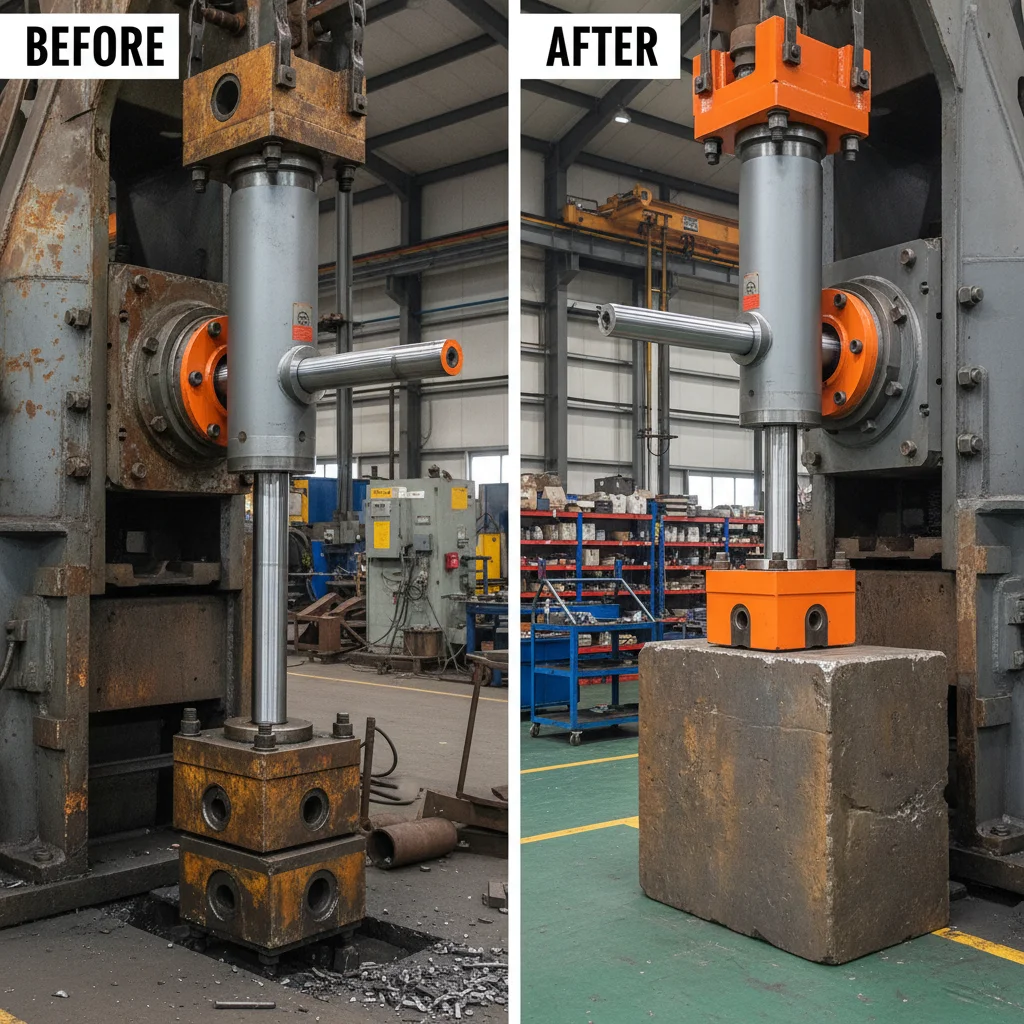
· Manufacturing Presses and Automation Lines: In manufacturing, double-acting cylinders are integral to a myriad of processes. Metal stamping presses, injection molding machines, and various clamping mechanisms rely on their bidirectional force. Consider an automotive stamping press where a cylinder must precisely lower a heavy die with thousands of tons of force to shape sheet metal, and then rapidly retract it to allow for workpiece removal and loading of the next blank. The speed and repeatability of the double-acting cylinder are crucial for maintaining high production rates and consistent product quality.
· Marine and Offshore Applications: The harsh marine environment presents unique challenges, yet double-sided hydraulic cylinders excel here. They are used in ship steering gear, anchor winches, hatch cover actuation, and offshore crane systems. A ship's steering system, for instance, requires immediate and powerful response to rudder commands in both directions to maintain course or execute maneuvers, often under significant resistance from water. Their robust construction with corrosion-resistant materials ensures reliability even in saltwater conditions.
· Agricultural Machinery (Tractors, Harvesters): Modern agriculture benefits immensely from hydraulic power. Double-acting cylinders are found in tractor linkages, implement lifts, balers, and combine harvesters. A tractor's three-point hitch uses these cylinders to raise and lower heavy implements, requiring controlled descent for ground engagement and powerful lift for transport. The consistent force output ensures optimal performance of attachments, enhancing productivity during planting, cultivation, and harvesting cycles.
These examples underscore the critical role of double-sided hydraulic cylinders in providing the controlled, powerful, and reliable linear motion essential for the efficient operation of a vast array of machinery worldwide.
The comprehensive exploration of the double sided hydraulic cylinder reveals it as an indispensable component in modern mechanical engineering, a true workhorse that underpins the functionality of countless industrial and mobile applications. Its inherent ability to generate controlled, powerful linear motion in both directions offers distinct advantages over single-acting alternatives, translating directly into enhanced operational efficiency, superior precision, and robust reliability. From the minute control required in automated manufacturing to the immense forces wielded by heavy construction equipment, these cylinders consistently deliver, proving their worth in the most demanding environments. The technical superiority derived from their dual-port design, coupled with advancements in material science and sealing technologies, ensures longevity and consistent performance under extreme conditions. Furthermore, the capacity for extensive customization means that these cylinders can be precisely tailored to meet the exacting specifications of virtually any application, optimizing system integration and maximizing operational effectiveness. As industries continue to push the boundaries of automation, speed, and precision, the role of the double sided hydraulic cylinder will only become more critical. Selecting the right cylinder and partnering with knowledgeable suppliers remains key to unlocking the full potential of this foundational hydraulic component, ensuring that systems not only perform but excel, delivering sustainable value and operational superiority for years to come.
1. What is the primary advantage of a double sided hydraulic cylinder over a single-acting one?
The primary advantage is its ability to generate controlled force in both extension and retraction strokes using hydraulic pressure, whereas a single-acting cylinder uses hydraulic pressure only for extension and relies on an external force (like gravity or a spring) for retraction. This allows for superior control, speed, and force application in both directions.
2. How do you calculate the force output of a double sided hydraulic cylinder?
The extending force (push) is calculated by multiplying the hydraulic pressure by the piston's effective area (bore area). The retracting force (pull) is calculated by multiplying the hydraulic pressure by the annular area of the piston (bore area minus the rod area). The rod's presence reduces the effective area on the retract side, resulting in slightly less force for retraction compared to extension, assuming the same pressure.
3. What are common applications for these cylinders?
Double-sided hydraulic cylinders are used extensively in construction equipment (excavator booms, buckets), manufacturing presses, injection molding machines, material handling equipment (forklifts, scissor lifts), agricultural machinery (tractor linkages), marine steering systems, and various industrial automation systems requiring bidirectional controlled movement.
4. What factors influence the lifespan of a double-sided hydraulic cylinder?
Key factors include the quality of materials and manufacturing, proper sizing for the application, operating pressure and temperature, fluid cleanliness and type, frequency of cycling, absence of side loading, proper maintenance (seal replacement, lubrication), and protection from environmental contaminants.
5. Can double sided hydraulic cylinders be customized?
Yes, they are highly customizable. Options include specific bore and stroke lengths, rod diameters, mounting configurations, material selection (e.g., stainless steel for corrosive environments), specialized sealing systems for extreme temperatures or pressures, integrated sensors for position feedback, and unique surface treatments or coatings.
6. What maintenance considerations are important for these cylinders?
Regular maintenance involves inspecting for leaks, checking rod surface for damage (pitting, scoring), ensuring proper lubrication, monitoring hydraulic fluid cleanliness and levels, inspecting mounting hardware, and replacing seals as part of a preventative schedule. Promptly addressing any signs of wear or damage can significantly extend cylinder life.
7. How does rod diameter affect the performance of a double sided cylinder?
A larger rod diameter increases the cylinder's stability and resistance to buckling under compressive loads. However, it also reduces the effective piston area on the retract side, which in turn reduces the retracting force and can slightly increase the retract speed (due to smaller volume displacing faster with same flow). Therefore, rod diameter is a critical design choice balancing strength, force, and speed requirements.