In the demanding world of heavy machinery and mobile equipment, the efficiency, reliability, and precision of movement are paramount. At the heart of this operational prowess lies a foundational component often overlooked but critically indispensable: the hydraulic track drive motor. These sophisticated powerhouses are the workhorses that convert hydraulic energy into the mechanical force required to propel tracked vehicles across the most challenging terrains, from rugged construction sites to dense agricultural fields and expansive mining operations. Without a robust and expertly engineered hydraulic track drive motor, excavators would sit idle, bulldozers would lack their formidable push, and agricultural harvesters would be unable to traverse uneven landscapes. This article delves into the intricate mechanics, unparalleled advantages, and strategic considerations involved in selecting and maintaining these vital components, ensuring your machinery operates at its peak potential. We explore how innovation in this field is not just about raw power, but about precision control, energy efficiency, and extended operational lifespans, driving productivity and reducing total cost of ownership across diverse industrial applications.
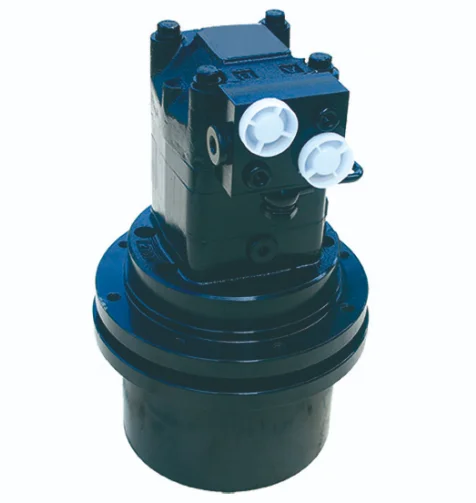
The engineering marvel that is a track drive motor embodies a confluence of hydraulic and mechanical principles designed for extreme durability and precise control. At its core, it typically integrates a high-efficiency hydraulic motor—often a piston or gear type—with a robust multi-stage planetary gearbox. This combination is crucial because it allows the relatively high speed, low torque output of the hydraulic motor to be transformed into the high torque, low speed required for track propulsion. Planetary gear sets are preferred for their compact size, high torque density, and excellent load-sharing capabilities, which contribute significantly to the motor's longevity and reliability under severe shock loads. Furthermore, these units are typically housed in a sealed, compact casing, protecting sensitive components from dust, debris, water, and other environmental contaminants commonly encountered in heavy-duty applications. Integrated braking systems, such as spring-applied, hydraulically released (SAHR) wet disc brakes, provide failsafe stopping power and secure parking capabilities, essential for safety on inclines and during maintenance. The precise control over speed and direction, often facilitated by sophisticated control valves and feedback systems, allows operators to maneuver heavy machinery with remarkable dexterity, enhancing safety and operational efficiency. This intricate design ensures that every ounce of hydraulic power is translated into effective, controlled traction.
The global market for track drive motors is characterized by a few dominant players alongside specialized manufacturers, each bringing unique strengths in terms of technology, product range, and service. Choosing the right manufacturer is a strategic decision that impacts machine performance, reliability, and long-term operational costs. A comparative analysis often reveals critical differences in areas such as power density, operational efficiency, durability under specific conditions, and customization options. Below is a comparative table highlighting key aspects of hypothetical leading manufacturers, illustrating the diverse options available:
Manufacturer | Primary Strength | Typical Torque Range (Nm) | Peak Efficiency (%) | Key Technologies/Features | Application Focus | Price Point (Relative) |
Manufacturer A | High Efficiency & Precision | 2,000 - 50,000 | >92% | Advanced piston design, integrated control valves, modular brake systems | Construction (excavators), Forestry | High |
Manufacturer B | Robustness & Durability | 1,500 - 60,000 | >90% | Heavy-duty planetary gears, reinforced housings, severe-duty seals | Mining, Agricultural (large harvesters) | Medium-High |
Manufacturer C | Compactness & Versatility | 800 - 25,000 | >88% | Radial piston design, compact footprint, wide range of displacements | Utility (trenchers), Aerial Work Platforms | Medium |
Manufacturer D | Innovation & Customization | 1,000 - 40,000 | >91% | Hydrostatic integration, smart sensor compatibility, bespoke solutions | Specialty Machines, Defense | High |
This table illustrates that while all manufacturers provide essential functionalities, their core competencies and technological investments often cater to specific industry demands. For instance, a manufacturer focusing on mining equipment might prioritize extreme robustness, while another targeting construction might emphasize efficiency and compact design. The choice hinges on aligning these manufacturer strengths with the specific requirements of the application, including environmental conditions, load profiles, and desired operational lifespan.
The generic "off-the-shelf" track drive motor, while capable, often falls short of delivering optimal performance for highly specialized machinery or extreme operating conditions. This is where the power of customization becomes a game-changer, transforming a standard component into a perfectly integrated solution that maximizes efficiency, longevity, and overall machine productivity. Customization options for these motors are extensive, ranging from subtle modifications to complete bespoke designs. For instance, varying displacement sizes and gear ratios allow engineers to fine-tune the motor's speed and torque output to match the precise requirements of the machine's tracks and desired ground speed, optimizing for either raw pulling power or faster transit speeds. Flange and shaft configurations can be adapted to seamlessly integrate with existing chassis designs and sprocket attachments, simplifying installation and reducing conversion costs. Moreover, brake systems can be tailored, offering options like dynamic braking, fail-safe parking brakes, or a combination thereof, ensuring safety and operational control specific to the application's demands, such as operating on steep inclines or lifting heavy loads. For harsh environments, specialized material choices for seals, housings, and internal components can significantly extend service life, resisting corrosion from saltwater, abrasion from sand, or degradation from extreme temperatures. Furthermore, the integration of advanced sensors for speed, temperature, and pressure monitoring allows for sophisticated diagnostic capabilities and predictive maintenance strategies, transforming reactive repairs into proactive upkeep. By collaborating closely with manufacturers, engineers can develop track drive motors that are not just components, but optimized subsystems integral to the machine's overall design and performance goals.
The impact of high-performance track drive motors reverberates across numerous industries, serving as the hidden power behind some of the world's most critical operations. In construction, advanced track drive motors enable excavators and bulldozers to deliver precise digging and grading capabilities, often operating for thousands of hours in dusty, high-vibration environments. For example, a leading contractor reported a 15% reduction in project completion time on a major infrastructure development after upgrading their fleet with excavators featuring track drive motors designed for enhanced torque at lower speeds, improving digging force and reducing cycle times. In the agricultural sector, particularly with large harvesters and forestry machines, these motors provide the necessary traction to navigate muddy fields and uneven terrain. One specialized forestry feller buncher, equipped with custom-designed track drive motors capable of enduring extreme temperatures and impact loads, demonstrated a 20% increase in operational uptime during harsh winter logging seasons, significantly boosting timber output. The mining industry relies heavily on robust track drive motors for massive excavators and drilling rigs that operate in highly abrasive and corrosive conditions. A study in a remote open-pit mine revealed that investing in track drive motors with enhanced sealing and heavy-duty planetary gears led to a 25% extension in service intervals and a 10% decrease in unscheduled downtime, directly translating into millions of dollars saved in productivity and maintenance costs. Even in specialized applications like military vehicles and utility trenchers, tailored track drive motors provide the reliability and maneuverability essential for mission success and efficient infrastructure development. These real-world applications underscore that the right track drive motor is not merely a component, but a strategic investment that directly translates into improved performance, reduced operational costs, and enhanced safety.
Ensuring the long-term reliability and peak performance of a track drive motor necessitates a proactive and diligent approach to maintenance. Given the harsh conditions these components often endure, neglecting routine checks can lead to premature failure, costly downtime, and significant repair expenses. Key to maximizing lifespan is vigilant fluid management; consistently monitoring the quality and level of hydraulic fluid and gearbox oil is paramount. Contaminated or degraded fluids can dramatically accelerate wear on internal components, reducing efficiency and leading to catastrophic failure. Regular oil analysis can detect early signs of wear metals or contaminants, allowing for timely intervention. Furthermore, the integrity of seals and gaskets must be regularly inspected. Damaged seals can lead to fluid leaks, ingress of water and dirt, and subsequent damage to bearings and gears. Any sign of leakage or external damage to the motor housing should prompt immediate investigation. Proper lubrication of external joints and pivot points, as per manufacturer specifications, also contributes to overall system health. Overheating is another critical factor; ensuring the hydraulic system's cooling mechanisms are functioning effectively prevents thermal degradation of fluids and components. Incorporating predictive maintenance technologies, such as vibration analysis and thermal imaging, can provide valuable insights into the motor's internal health, identifying potential issues before they escalate into major failures. By adhering to a comprehensive maintenance schedule and leveraging modern diagnostic tools, operators can significantly extend the operational life of their track drive motors, optimizing their return on investment and ensuring continuous, reliable performance in the field.
The hydraulic track drive motor stands as an undeniable cornerstone in the realm of heavy equipment, continually evolving to meet the escalating demands of modern industries. Its ability to deliver immense power, precise control, and unparalleled durability in the most challenging environments makes it irreplaceable for tracked machinery worldwide. As industries push the boundaries of operational efficiency and environmental sustainability, the future of hydraulic track drive motor technology promises even greater advancements. We are already seeing trends towards smarter, more integrated systems that incorporate advanced sensors for real-time diagnostics, predictive maintenance capabilities, and even remote monitoring. The drive for enhanced energy efficiency will lead to further innovations in hydraulic pump and motor design, potentially exploring hybrid electric-hydraulic systems that reduce fuel consumption and emissions without compromising power. Material science will continue to play a crucial role, developing lighter, stronger, and more resilient components that can withstand increasingly severe operational stresses. Ultimately, investing in a high-quality, well-maintained hydraulic track drive motor is not just about acquiring a component; it is about securing the operational heartbeat of your most valuable machinery. It’s an investment in reliability, productivity, and the peace of mind that comes from knowing your equipment is powered by the best available technology, ready to tackle any challenge the job site presents today and well into the future.
Here are some common questions about hydraulic track drive motors:
1. What is a hydraulic track drive motor?
A hydraulic track drive motor is a self-contained unit that converts hydraulic fluid pressure and flow into mechanical rotational force, specifically designed to propel the tracks of heavy machinery like excavators, bulldozers, and harvesters. It typically integrates a hydraulic motor with a planetary gearbox and a brake system.
2. How does a track drive motor differ from other hydraulic motors?
While all hydraulic motors convert hydraulic energy to mechanical, a track drive motor is engineered for specific application demands. It integrates a high-ratio planetary gearbox to provide high torque at low speeds for track propulsion, is typically housed in a compact, sealed unit to protect against harsh environments, and often includes an integrated braking system (e.g., SAHR brakes).
3. What key performance indicators (KPIs) should I consider when selecting a hydraulic track drive motor?
Critical KPIs include maximum continuous torque, speed range (RPM), hydraulic displacement, maximum operating pressure, overall efficiency, thermal stability, seal integrity, integrated braking capabilities, and specific mounting/flange dimensions.
4. What industries primarily utilize hydraulic track drive motors?
These motors are essential in the construction (excavators, dozers, compact track loaders), agriculture (harvesters, forestry equipment), mining (large excavators, drills), utility (trenchers, cable layers), and defense sectors due to their need for robust, reliable track propulsion.
5. How often should a hydraulic track drive motor be serviced?
Service intervals vary by manufacturer and operating conditions, but typically involve regular checks of hydraulic fluid and gearbox oil levels/quality (often every 500-1000 hours), inspection of seals and external housing, and replacement of fluids and filters at recommended intervals (e.g., every 2000-4000 hours). Always refer to the specific OEM's maintenance manual.
6. Can these motors be customized for unique applications?
Yes, customization is a significant advantage. Manufacturers can tailor aspects such as displacement, gear ratios, flange/shaft configurations, brake types, material specifications for seals and housings, and integrate specific sensors to meet unique machine designs or extreme environmental demands.
7. What are common signs of wear or failure in a track drive motor?
Common indicators include reduced drive power or speed, unusual noises (grinding, whining), excessive heat generation, hydraulic fluid leaks (especially around seals), uncontrolled movements, or inconsistent braking performance. Prompt investigation of these signs can prevent more severe damage.