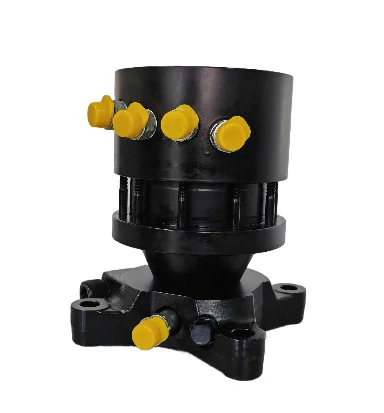
The landscape of modern construction, landscaping, and utility work is constantly evolving, demanding greater efficiency, precision, and versatility from equipment. At the forefront of this evolution stands the tilt rotator for mini excavator – a revolutionary attachment that redefines the capabilities of compact machinery. Far more than just a simple coupling mechanism, a tilt rotator grants an excavator bucket or other attachment the ability to rotate continuously through 360 degrees and tilt up to 45 degrees in two directions. This transformative functionality empowers operators to manipulate attachments with unparalleled agility, allowing them to reach previously inaccessible angles, grade with pinpoint accuracy, and position materials with effortless precision, all without repeatedly repositioning the excavator itself. For mini excavators, where space is often at a premium and maneuverability is critical, the tilt rotator dramatically expands their operational envelope. It converts a traditionally rigid digging tool into a highly dextrous extension of the operator’s will, enabling complex tasks to be completed faster, safer, and with superior results. This innovative technology isn't merely an upgrade; it's a fundamental shift in how mini excavators are utilized, ushering in an era of enhanced productivity and operator empowerment across a myriad of applications. Its robust design, coupled with advanced control systems, ensures that even the most demanding tasks can be approached with newfound confidence and efficiency, making the tilt rotator an indispensable asset for any contractor aiming for peak operational performance.
The anecdotal praise for tilt rotators is abundant, but the true testament to their value lies in the hard data showcasing their tangible impact on productivity and return on investment. Studies and real-world project analyses consistently demonstrate significant gains across various key performance indicators. For instance, projects utilizing a tilt rotator for mini excavator often report an average reduction of 25-50% in the number of machine movements required to complete a task. This translates directly into substantial time savings, with some operators achieving project completion times up to 30% faster than conventional methods. Consider a trenching operation: without a tilt rotator, an operator might need to reposition the excavator multiple times to achieve the correct angle and depth for turns or sloped sections. With a tilt rotator, the bucket can simply tilt and rotate, allowing the operator to maintain a consistent digging line from a single machine position. This not only saves fuel, which can see reductions of 10-15% due to less idling and travel, but also significantly reduces wear and tear on the excavator's tracks and swing components. Furthermore, the enhanced precision often reduces the need for manual labor for finishing work by up to 60%, leading to considerable labor cost savings and improved site safety. The cumulative effect of these efficiencies is a compelling financial argument: many contractors report a payback period for their tilt rotator investment as short as 12-18 months, depending on usage intensity. This rapid ROI, coupled with increased project capacity and the ability to bid on more diverse and complex jobs, firmly establishes the tilt rotator as a critical asset for businesses focused on bottom-line growth and operational excellence.
The superior performance of a tilt rotator for mini excavator is rooted in its sophisticated engineering and integration of cutting-edge technologies. At its heart lies a robust hydraulic system, meticulously designed to deliver proportional control and smooth, precise movements. Modern tilt rotators feature advanced proportional control valves that allow operators to vary the speed and power of both the tilt and rotation functions, offering nuanced manipulation of attachments. This level of control is crucial for tasks requiring delicate precision, such as fine grading or working around sensitive utility lines. Durability is paramount, given the demanding environments these units operate in. High-strength steel alloys, often heat-treated, are used for critical components like the housing and quick coupler, ensuring resistance to wear, impact, and fatigue. Integrated lubrication systems, often automated, extend the lifespan of moving parts and reduce daily maintenance requirements. Safety is another major design consideration. Many models incorporate automatic locking mechanisms for attachments, preventing accidental detachment. Overload protection systems safeguard both the tilt rotator and the excavator from excessive forces, while intelligent sensor arrays can provide real-time feedback to the operator, enhancing awareness and preventing errors. Beyond mechanical strength, the integration with the excavator's control system is vital. Modern tilt rotators utilize advanced CAN bus systems, allowing seamless communication between the rotator, the excavator, and the operator interface. This enables customized button layouts on joysticks, intuitive display readouts, and even remote diagnostics, optimizing the user experience. Some high-end models feature integrated grippers, further expanding their multi-functionality by allowing operators to pick up and place objects without switching attachments. These technical advancements collectively ensure that a tilt rotator not only withstands the rigors of daily operation but also elevates the mini excavator's performance to an entirely new level of precision and versatility.
Choosing the right tilt rotator for a mini excavator involves a careful evaluation of various manufacturers, each offering distinct advantages in design, features, and support. The market features several prominent players known for their innovation and quality. Understanding their core offerings can guide your decision-making process. While specific models and features evolve, a general comparison of key aspects can highlight the differences. Key considerations typically include build quality, hydraulic system sophistication, control system integration, range of compatible attachments, and after-sales support. For instance, some manufacturers might excel in providing highly intuitive control systems, while others might focus on maximizing lifting capacity or offering unique safety features. It's also important to consider the quick coupler system and its compatibility with your existing and future attachment fleet. Many brands offer their proprietary systems, but there are also universal options. Below is a comparative overview of some leading manufacturers, based on typical product characteristics:
Manufacturer | Key Feature Focus | Hydraulic System | Control System Integration | Typical Target Applications | Unique Selling Proposition |
Engcon | Versatility, safety, advanced control | Proportional, high-flow | DC2, ePS (fully integrated) | General construction, landscaping, utilities | ePS (Engcon Positioning System), EC-Oil (fully automatic quick coupler) |
Rototilt | Robustness, power, operator comfort | Proportional, strong hydraulics | ICS (Intelligent Control System) | Heavy-duty applications, forestry, demolition | SecureLock™ (safety), RPS (Rototilt Positioning System), RCTrack™ |
Steelwrist | Compact design, efficiency, open standards | Proportional, efficient flow | XControl (open standard) | Urban construction, rental fleets, precision work | Open-S standard, SQ (fully automatic quick coupler), integrated gripper |
Geith / Wacker Neuson | Simplicity, durability, cost-effectiveness | Reliable, direct control options | Standard hydraulic integration | General digging, smaller contractors | Strong focus on robust build for harsh conditions |
This table serves as a general guide. Prospective buyers should always delve into specific model specifications, consult with dealers, and consider their unique operational needs and budget. Factors such as dealer network, spare parts availability, and warranty policies also play a crucial role in the long-term satisfaction and efficiency of your investment.
The true power of a tilt rotator for mini excavators extends beyond its inherent functionality; it lies in its remarkable adaptability and the vast array of customization options available. Manufacturers understand that every job site and every operator has unique requirements, leading to solutions that allow for extensive tailoring. One of the primary areas of customization involves the control system. While many tilt rotators offer advanced proportional control via sophisticated joysticks, the integration needs to be seamless with the specific make and model of mini excavator. This often involves specific wiring harnesses, software configurations, and even custom joystick grips to ensure ergonomic comfort and intuitive operation. Some systems allow operators to program specific button functions, adjusting sensitivity and speed settings for various tasks or attachments. Beyond controls, the quick coupler system is a critical customization point. Operators can choose between fully automatic quick couplers, which allow attachment changes from the cab, significantly reducing downtime and enhancing safety, and semi-automatic systems. The choice often depends on the frequency of attachment changes and the budget. The range of compatible attachments is another testament to customization. From a diverse array of digging buckets (grading, trenching, rock), grapples (sorting, demolition), hydraulic breakers, plate compactors, asphalt cutters, and even specialized forestry tools, the tilt rotator acts as a universal hub. Many systems also offer integrated sensors for positioning, allowing for precise depth and angle control in conjunction with 2D or 3D machine control systems. This level of integration transforms a mini excavator into a multi-functional powerhouse, capable of adapting to almost any task with minimal effort and maximum efficiency. Customization ensures that the investment in a tilt rotator truly maximizes the mini excavator's potential, delivering bespoke performance for every project.
The transformative capabilities of a tilt rotator for mini excavators are best illustrated through its diverse applications across various industries, showcasing how this single attachment dramatically enhances operational efficiency and opens new possibilities. In landscaping, the tilt rotator is invaluable for precision grading, sculpting terrain, and preparing intricate garden beds. Operators can effortlessly create complex contours, dig precise tree pits, and spread materials like topsoil or gravel with unparalleled accuracy, significantly reducing manual labor for raking and leveling. For utility installation and maintenance, the ability to precisely angle and rotate a bucket or trenching tool is critical. It allows for accurate digging around existing pipes, cables, and infrastructure in confined urban environments, minimizing the risk of damage. Laying pipes or cables on a slope becomes straightforward, as the operator can maintain a consistent grade without constant machine repositioning. In general construction, from foundation work to site preparation and light demolition, the tilt rotator streamlines numerous tasks. Digging complex foundations with multiple angles, backfilling with precision, or sorting debris with a grapple attachment becomes exponentially faster and more efficient. The ability to manipulate a breaker with a full range of motion allows for more effective demolition in tight spots. Even in more specialized fields like forestry or agriculture, tilt rotators are proving their worth. Equipped with specific grapples, they can efficiently handle logs, clear brush, or even assist in planting. Each application underscores the tilt rotator's core value: enabling operators to achieve more with less effort, reducing project timelines, improving safety by minimizing manual intervention, and ultimately delivering superior quality work across a spectrum of challenging environments.
The decision to invest in a tilt rotator for mini excavator represents a strategic move towards enhanced productivity, versatility, and profitability. However, making the right choice requires a comprehensive understanding of your specific operational needs and a careful evaluation of the available market offerings. Consider first the size and hydraulic capacity of your mini excavator; ensuring compatibility is paramount. A properly matched tilt rotator will integrate seamlessly, allowing your machine to perform at its peak without undue strain. Evaluate the types of tasks you most frequently undertake: do you prioritize heavy digging and demolition, or intricate landscaping and precision utility work? This will influence the specific features, such as integrated grippers, advanced positioning systems, or heavy-duty construction, that will deliver the most value. Control system preference also plays a significant role; some operators prefer simpler, more direct hydraulic controls, while others thrive on the sophisticated, programmable interfaces offered by advanced proportional systems. Moreover, assess the long-term support infrastructure provided by manufacturers, including parts availability, service networks, and warranty terms. A robust support system is crucial for minimizing downtime and maximizing the lifespan of your investment. Looking ahead, the evolution of tilt rotator technology continues, with advancements in remote diagnostics, predictive maintenance, and even semi-autonomous functions on the horizon, promising even greater efficiencies. By meticulously aligning the tilt rotator's capabilities with your operational demands, you can unlock the full potential of your mini excavator, transforming it into an indispensable, multi-functional tool that consistently delivers superior results and a tangible competitive edge in today's demanding market. This strategic selection is not just about purchasing an attachment; it's about investing in the future efficiency and capability of your entire operation.
What exactly is a tilt rotator for a mini excavator?
A tilt rotator is a hydraulic attachment that connects to the end of a mini excavator's stick, allowing any mounted attachment (like a bucket, grapple, or hammer) to rotate continuously 360 degrees and tilt up to 45 degrees left or right. This provides extreme flexibility and precision, eliminating the need to constantly reposition the excavator.
How does a tilt rotator improve productivity on a job site?
It significantly enhances productivity by reducing machine movements, as operators can achieve desired angles and positions without frequently repositioning the excavator. This leads to faster task completion, reduced fuel consumption, less wear and tear on the machine, and often decreases the need for manual labor for finishing work, resulting in up to 30-50% efficiency gains on many tasks.
Are tilt rotators compatible with all mini excavators?
While most major tilt rotator brands offer models compatible with a wide range of mini excavators, specific compatibility depends on the excavator's operating weight, hydraulic flow, and control system. It's crucial to consult with the tilt rotator manufacturer or dealer to ensure proper matching and integration for optimal performance and safety.
What types of attachments can be used with a tilt rotator?
A vast array of attachments can be used, including various digging buckets (grading, trenching, general purpose), grapples (sorting, demolition, material handling), hydraulic breakers, plate compactors, asphalt cutters, rippers, and even specialized forestry tools. The tilt rotator acts as a universal adapter, making each attachment significantly more versatile.
What are the main benefits of a fully automatic quick coupler system with a tilt rotator?
Fully automatic quick couplers, like Engcon's EC-Oil or Steelwrist's SQ, allow operators to change hydraulic attachments from the cab without leaving the machine to connect hoses manually. This drastically reduces attachment change time, improves safety by keeping operators out of dangerous areas, and maximizes uptime, leading to higher overall efficiency.
What is the typical return on investment (ROI) for a tilt rotator?
The ROI for a tilt rotator can be quite rapid, often reported within 12-24 months for busy contractors. This is driven by significant savings in time, fuel, labor costs, and reduced machine wear, alongside the ability to take on more complex and diverse projects, enhancing the company's competitive edge and profitability.
What are the key considerations when choosing a tilt rotator for my mini excavator?
Key considerations include compatibility with your excavator (weight, hydraulics, controls), your primary applications (which features are most important), the reputation and support network of the manufacturer, the quick coupler system (manual, semi-auto, full auto), integrated features like grippers or positioning systems, and your overall budget. Thorough research and dealer consultation are recommended.