In the demanding world of logistics, warehousing, and industrial operations, forklifts stand as indispensable workhorses, lifting and transporting countless tons of materials daily. At the heart of their lifting and tilting mechanisms lies a component often overlooked yet utterly critical: the forklift hydraulic cylinder. These powerhouses convert hydraulic fluid pressure into linear force, enabling precise vertical movement of loads and controlled tilting of mast assemblies. Their reliability directly impacts operational efficiency, safety compliance, and ultimately, profitability. A single cylinder failure can cascade into significant operational disruptions, costing businesses not only in repair expenses but also in lost productivity and potential damage to goods or infrastructure. Consider that the global material handling equipment market, valued at over $200 billion annually, relies heavily on the uninterrupted performance of such components. Industry data suggests that unscheduled downtime due to component failure can range from $100 to $500 per hour, illustrating the immense financial pressure on maintaining robust hydraulic systems. Therefore, investing in high-quality, dependable hydraulic cylinders is not merely a purchasing decision; it's a strategic imperative for any enterprise aiming for peak operational excellence and minimal total cost of ownership. The subtle hum of a well-functioning hydraulic cylinder is the sound of consistent productivity, ensuring that goods move efficiently from point A to point B without interruption.
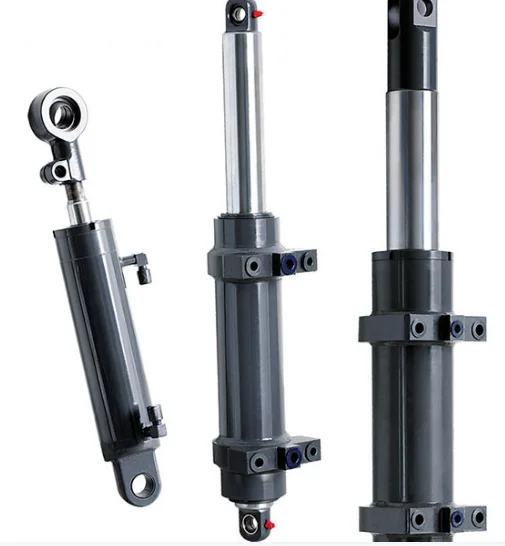
The seemingly straightforward design of a hydraulic cylinder belies a complex interplay of engineering principles and material science. At its core, a forklift hydraulic cylinder consists of a precision-machined barrel, a robust piston rod, a piston head, and a series of high-performance seals. When hydraulic fluid, pressurized by the forklift's pump, enters one end of the cylinder, it exerts force on the piston, causing the rod to extend or retract. This elegant application of Pascal's law translates into immense lifting power with precise control. The integrity and performance of each component are paramount. Piston rods are typically crafted from high-tensile steel, often hard chrome-plated to resist corrosion, abrasion, and impact, ensuring a smooth, low-friction surface for seals. The barrel, or cylinder tube, requires exacting internal finishes to prevent leaks and maximize seal life. Sealing technology is another critical differentiator; advanced polyurethane (PU) and PTFE compounds offer superior resistance to wear, temperature fluctuations, and chemical degradation compared to traditional NBR seals, directly contributing to extended service intervals and reduced fluid loss. The sophistication of welding techniques used to join components, the precision of honing processes to finish internal bores, and the quality of threaded connections for ports all converge to define a cylinder's longevity and operational smoothness. These meticulous engineering considerations ensure that each lift and tilt motion is executed with unparalleled accuracy and stability, safeguarding both operators and cargo.
The true value of a high-performance hydraulic cylinder transcends its initial purchase price; it is quantifiable through tangible operational metrics. Elevating cylinder quality directly impacts key performance indicators across a fleet. For instance, superior sealing systems and robust material construction can increase the Mean Time Between Failures (MTBF) by as much as 30-40% compared to standard alternatives. This reduction in failure rates translates directly into fewer unplanned maintenance interventions and extended operational periods for individual forklifts. Furthermore, advanced hydraulic cylinders featuring optimized internal geometries and low-friction seals can contribute to a 5-10% reduction in energy consumption per lift cycle, a substantial saving when compounded across a fleet operating thousands of cycles daily. For a medium-sized warehouse running 50 forklifts, this could equate to annual energy cost reductions upwards of $15,000 to $25,000. Beyond energy, improved cylinder efficiency reduces stress on the entire hydraulic system, extending the life of pumps and valves, and lowering overall maintenance expenditure. Predictive maintenance initiatives, often integrated with modern telematics systems, can further leverage the reliability of advanced cylinders by providing more accurate projections for service needs, minimizing reactive repairs. The data unequivocally supports that a robust, intelligently designed hydraulic cylinder is not just a component but a critical investment in maximizing uptime, reducing operational overheads, and boosting the overall productivity of material handling operations.
Modern forklift hydraulic cylinders are no longer static, rudimentary components; they are increasingly sophisticated devices integrating cutting-edge technology. One significant advantage is the incorporation of advanced dampening systems. These internal mechanisms absorb kinetic energy at the end of a stroke, preventing harsh impacts and reducing wear on the cylinder and the forklift structure. This leads to smoother operation, extended component life, and enhanced operator comfort. Another critical innovation lies in sophisticated surface treatments beyond standard hard chroming, such as ceramic coatings or specialized nitriding processes. These treatments offer superior corrosion resistance in harsh environments (e.g., saltwater, chemical processing plants) and significantly improved wear resistance, extending cylinder life even under extreme loads and abrasive conditions. Furthermore, the integration of smart sensor technology is transforming cylinder functionality. Pressure transducers, position sensors, and temperature sensors can be embedded directly into the cylinder body, providing real-time data to the forklift's control system. This enables precise load weighing, automated lift height adjustments, collision avoidance, and even predictive maintenance diagnostics, contributing to safer, more autonomous operations. Modular design principles also offer distinct technical advantages, allowing for easier field servicing, quicker seal replacement, and simplified component upgrades. High-pressure capabilities, often exceeding 250 bar (3600 psi), are becoming standard, enabling more compact cylinder designs to handle equivalent loads, freeing up valuable space on the forklift frame. These technical advancements collectively ensure that contemporary hydraulic cylinders are robust, intelligent, and highly adaptable to the evolving demands of industrial applications.
Selecting the right manufacturer for forklift hydraulic cylinders is a decision that can significantly influence the longevity, safety, and efficiency of your fleet. It’s imperative to move beyond price as the sole determinant and evaluate manufacturers based on a comprehensive set of technical and service criteria. Below is a comparative overview highlighting key distinctions often found between different cylinder manufacturers, illustrating the varying levels of quality and support available in the market:
Feature/Criterion | Manufacturer A (Premium) | Manufacturer B (Standard) | Manufacturer C (Economy) |
Material Quality (Rod) | High-tensile steel, induction hardened, multi-layer hard chrome plating (e.g., 25-50 microns) | Standard tensile steel, single-layer hard chrome plating (e.g., 15-20 microns) | Basic carbon steel, thin chrome plating (e.g., <10 microns) |
Sealing Technology | Advanced PU/PTFE/Viton compounds, multi-lip seals, integrated wipers for extreme environments | Standard NBR/Polyurethane seals, basic wiper rings | Basic rubber seals, minimal wiper protection |
Pressure Rating | >250 bar (3600 psi), tested to 150% working pressure | 200-220 bar (2900-3200 psi), tested to 125% working pressure | <180 bar (2600 psi), tested to 110% working pressure |
Corrosion Resistance | Superior salt spray resistance (>500 hrs), optional ceramic or nickel plating | Moderate salt spray resistance (200-300 hrs) | Limited salt spray resistance (<100 hrs) |
Warranty Period | 2-3 years, comprehensive coverage | 1 year, standard coverage | 6 months, limited coverage |
Customization Options | Extensive engineering support, bespoke designs for specific applications, sensor integration | Limited options for bore/stroke, standard mounting types | Off-the-shelf only, no customization |
Certifications | ISO 9001, CE, TUV, specific industry standards (e.g., ATEX for hazardous zones) | ISO 9001, CE | Basic compliance, if any |
Dampening System | Integrated hydraulic end-cushioning for smooth operation | Optional or rudimentary cushioning | Generally none |
This comparison underscores that a premium manufacturer, while potentially having a higher initial cost, offers unparalleled material quality, advanced sealing, higher pressure tolerances, and superior corrosion resistance, backed by extensive warranties and customization capabilities. These attributes translate into drastically reduced lifecycle costs, enhanced safety, and consistent performance, making them the economically sound choice for long-term operational excellence.
While standard forklift hydraulic cylinders serve a broad range of applications, many industries and specialized operations demand bespoke solutions to achieve optimal performance, safety, and longevity. The ability to customize a hydraulic cylinder to precise specifications can dramatically impact an operation's efficiency and address unique environmental or functional challenges. Customization options are extensive, ranging from fundamental dimensions to highly specialized material treatments and integrated functionalities. For instance, bore size and stroke length can be precisely tailored to optimize lift height, load capacity, and retraction speed for specific forklift models or niche material handling tasks. Mounting types – clevis, flange, trunnion – can be configured to integrate seamlessly with non-standard chassis designs or specialized mast assemblies. Rod diameter and material composition can be adjusted for increased strength in extreme heavy-duty applications or for enhanced corrosion resistance, such as the use of stainless steel rods and barrels in food processing or marine environments. Furthermore, unique port configurations can be designed to accommodate specialized hydraulic systems or to improve fluid flow dynamics. Beyond physical attributes, customization extends to seal materials (e.g., Viton for high-temperature resistance, FDA-approved compounds for sanitary applications), specific surface coatings (e.g., ceramic for abrasion resistance, Xylan for non-stick properties), and the integration of advanced sensors for real-time feedback loops. Working with a manufacturer capable of comprehensive engineering design and custom fabrication ensures that the hydraulic cylinder is not merely a component, but a perfectly integrated solution, precisely tuned to mitigate specific operational risks, enhance ergonomic factors, and maximize the efficiency of even the most demanding material handling scenarios.
The impact of high-quality forklift hydraulic cylinders reverberates across a multitude of industries, proving their versatility and critical importance in real-world scenarios. In heavy-duty warehousing, robust cylinders ensure the stable, rapid movement of palletized goods, often reaching heights exceeding 10 meters, where precision and strength are non-negotiable. Cold storage facilities, where temperatures can drop below -20°C, rely on cylinders equipped with specialized low-temperature seals and hydraulic fluids to prevent freezing and maintain performance integrity, averting costly downtime. On construction sites, cylinders built with enhanced dust wipers and more resilient rod plating withstand abrasive environments and potential physical impacts, guaranteeing operational continuity despite harsh conditions. Food processing plants utilize cylinders manufactured from stainless steel and fitted with FDA-approved seals, ensuring hygiene compliance and preventing contamination. For automated storage and retrieval systems (AS/RS), the precision and speed of sophisticated cylinders, often integrated with position sensors, are paramount for accurate item retrieval and placement within tightly controlled parameters, facilitating rapid inventory turnover. Looking ahead, the future of the forklift hydraulic cylinder is intrinsically linked to advancements in automation and IoT. We can expect even greater integration of smart sensors for predictive maintenance, allowing for proactive servicing based on real-time wear data, rather than reactive repairs. New materials and manufacturing techniques will likely yield even lighter, stronger, and more energy-efficient cylinders, contributing to the electrification of material handling equipment and reduced carbon footprints. Furthermore, as forklifts become increasingly autonomous, hydraulic cylinders will play a pivotal role in delivering the precise, repeatable movements required for safe and efficient unmanned operations. The constant evolution of this fundamental component underscores its enduring significance in shaping the capabilities and safety of modern material handling.
Q1: What are the primary types of forklift hydraulic cylinders?
A1: Forklifts typically utilize two main types: lift cylinders (responsible for raising and lowering the mast and forks) and tilt cylinders (which control the forward and backward tilt of the mast). Lift cylinders are often telescopic for greater height, while tilt cylinders are usually single-stage.
Q2: How often should forklift hydraulic cylinders be inspected?
A2: It's recommended to visually inspect cylinders daily before operation for leaks or damage. More thorough inspections, including checking for rod straightness, seal integrity, and proper mounting, should be part of a regularly scheduled preventive maintenance program, typically quarterly or every 250-500 operating hours, depending on usage severity and manufacturer guidelines.
Q3: What are the common signs of a failing hydraulic cylinder?
A3: Key indicators include hydraulic fluid leaks around seals or ports, sluggish or erratic lifting/tilting, visible scoring or pitting on the piston rod, excessive noise during operation, or the mast drifting downwards when holding a load. Any of these signs warrant immediate investigation.
Q4: What factors should be considered when choosing a replacement forklift hydraulic cylinder?
A4: Critical factors include bore and rod diameter, stroke length, mounting type, pressure rating, material quality (especially for rods and seals), operating environment (temperature, contaminants), and the original equipment manufacturer (OEM) specifications. Compatibility with the existing hydraulic system is paramount.
Q5: Can hydraulic cylinders be repaired, or should they always be replaced?
A5: Many hydraulic cylinders can be successfully repaired, especially if the damage is limited to worn seals, minor rod scoring, or simple leaks. Repair often involves replacing seals, polishing or re-chroming rods, or repairing the barrel. However, severe damage like bent rods, cracked barrels, or internal component failure often necessitates full replacement for safety and long-term reliability.
Q6: How does the operating environment affect a hydraulic cylinder's lifespan?
A6: Harsh environments significantly impact lifespan. High humidity or corrosive atmospheres accelerate rust on exposed rods. Dusty or abrasive conditions can contaminate hydraulic fluid and damage seals. Extreme temperatures (both hot and cold) can degrade seal materials and alter fluid viscosity, leading to increased wear and reduced efficiency. Specialized materials and coatings are crucial for these conditions.
Q7: What role do seals play in the performance and longevity of a forklift hydraulic cylinder?
A7: Seals are critical. They prevent internal and external fluid leakage, maintain pressure within the cylinder, and protect internal components from contaminants. High-quality seals, made from appropriate materials (e.g., polyurethane for wear, Viton for high temperature), ensure efficient operation, prevent premature failure, and extend the overall lifespan of the cylinder by maintaining a clean and pressurized internal environment.