In the relentless pursuit of peak operational efficiency and precise control across heavy machinery and industrial applications, the hydrostatic drive motor stands as a cornerstone of modern engineering. This sophisticated power transmission solution has transformed how industries approach motion control, delivering unparalleled flexibility and performance. Recent industry analyses project the global hydrostatic transmission market to exceed $28 billion by 2027, driven by increasing demand for robust and efficient systems in agriculture, construction, and material handling. This growth isn't just a trend; it's a testament to the inherent advantages these motors offer. Consider the impact: a well-designed hydrostatic system can achieve energy efficiency ratings upwards of 90% in specific operating ranges, drastically reducing fuel consumption and operational costs for end-users. Furthermore, the ability to deliver full torque at zero speed and seamless speed variations without complex gearing mechanisms presents a compelling economic and technical advantage. For businesses looking to optimize their fleet performance, reduce downtime, and enhance operator productivity, understanding the fundamental capabilities and benefits of these advanced motors is no longer optional—it is imperative for competitive advantage.
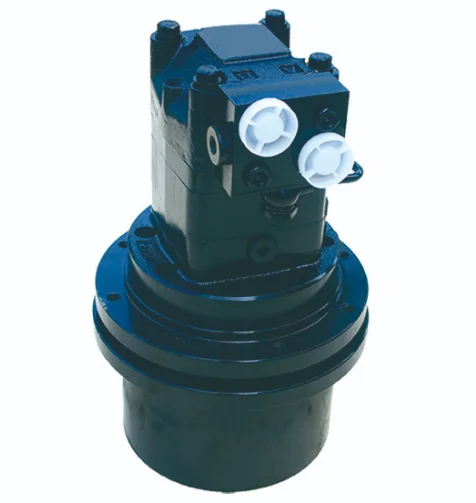
The inherent technical advantages of hydrostatic drive motors are multifaceted, setting them apart from conventional mechanical or electric drive systems. Foremost among these is their exceptional variable speed control, offering infinite speed ratios from zero to maximum with continuous torque delivery. This is achieved through a variable displacement pump feeding a fixed or variable displacement motor, allowing operators precise command over speed and direction without discrete gear steps. Such seamless modulation significantly reduces shock loads on machinery components, extending their lifespan and minimizing wear and tear. Another critical benefit is their high power density. Hydrostatic units can transmit substantial power within a compact footprint, making them ideal for applications where space is at a premium but robust performance is non-negotiable. This efficiency often translates into smaller, lighter machine designs. Moreover, hydrostatic systems offer inherent overload protection; pressure relief valves can prevent damage by limiting maximum torque, safeguarding both the motor and the driven equipment. Their sealed nature also means they are less susceptible to environmental contaminants, enhancing reliability in harsh operating conditions. The ability to integrate advanced electronic controls further elevates their precision, enabling sophisticated automation and remote operation capabilities, thereby boosting productivity and safety across various demanding tasks.
At the heart of every hydrostatic drive motor's superior performance lies its elegant mechanical design, typically employing either axial piston or radial piston configurations. Axial piston motors are characterized by pistons arranged parallel to the drive shaft, driven by an angled swashplate or bent axis. This design offers excellent efficiency, high-speed capabilities, and compact packaging, making them widely adopted in mobile equipment. Radial piston motors, conversely, feature pistons arranged perpendicularly to the drive shaft, pushing against an eccentric cam or housing. These motors are renowned for their high starting torque, smooth operation at very low speeds, and exceptional robustness, often preferred in heavy-duty, low-speed applications such as winches or injection molding machines. Both types operate on the principle of converting hydraulic pressure and flow into rotational mechanical energy. A high-pressure hydraulic fluid, supplied by a pump, forces the pistons to move, which in turn rotates the output shaft. The amount of fluid flow determines the motor's speed, while the pressure dictates the torque it can generate. This direct conversion of hydraulic power to mechanical motion, free from clutches or gearboxes, ensures remarkable responsiveness and efficiency, allowing for precise control over acceleration, deceleration, and braking, all critical factors in dynamic operational environments.
Selecting the right hydrostatic drive motor involves navigating a diverse landscape of manufacturers, each offering unique strengths in design, performance, and application focus. While specific models vary greatly, a comparative approach helps highlight key differentiators. Below is a simplified comparison table illustrating typical performance characteristics you might encounter when evaluating options from leading providers in the industry. It’s important to note that these are representative figures and actual specifications will depend on the exact model and configuration. This comparison underscores the importance of aligning motor specifications with the precise demands of the intended application, considering factors like peak pressure, continuous power output, and integrated control features.
Feature/Manufacturer | Apex Power Solutions | Fluid Dynamics Innovations | MegaMotion Systems |
Max Displacement (cc/rev) | 160 | 250 | 100 |
Peak Operating Pressure (bar) | 420 | 450 | 380 |
Continuous Torque (Nm) | 750 | 1200 | 500 |
Overall Efficiency (%) | ~92% | ~94% | ~90% |
Speed Range (RPM) | 0-4500 | 0-3000 | 0-5500 |
Key Advantage | Compact, High-Speed | Robust, High-Torque | Cost-Effective, Versatile |
Typical Lead Time | 4-6 Weeks | 6-8 Weeks | 3-5 Weeks |
This table highlights how manufacturers often specialize, with some prioritizing compactness and high speed for lighter tasks, while others focus on sheer power and durability for the most demanding applications. Factors such as integration capabilities with existing hydraulic systems, availability of spare parts, and global service networks are also crucial considerations that can significantly impact the long-term cost of ownership and operational uptime.
The versatility of hydrostatic drive motors truly shines in their capacity for customization and integration into highly specialized systems. While off-the-shelf units provide excellent foundational performance, many industrial and mobile applications demand bespoke solutions that optimize performance for unique operational parameters. This often involves collaborating with manufacturers or system integrators to tailor various aspects:
· Displacement Optimization: Adjusting the motor's displacement to precisely match required torque and speed characteristics for a specific load profile.
· Integrated Valve Blocks: Designing custom valve manifolds that incorporate specific control functions, safety features, and pressure regulation directly onto or within the motor housing, simplifying plumbing and improving responsiveness.
· Sensor Integration: Embedding advanced sensors for real-time monitoring of speed, pressure, temperature, and position, enabling sophisticated feedback control and predictive maintenance strategies.
· Shaft and Mounting Configurations: Modifying output shaft designs (splined, keyed, tapered) and mounting flanges to ensure seamless mechanical compatibility with existing machinery.
· Environmental Hardening: Specifying materials, seals, and coatings that can withstand extreme temperatures, corrosive agents, or abrasive environments, common in marine, mining, or chemical processing industries.
Such tailored approaches ensure that the hydrostatic system not only meets but often exceeds performance expectations, driving innovation and efficiency in areas where generic solutions would fall short. The result is a highly efficient, reliable, and perfectly integrated power solution that maximizes the return on investment for complex machinery.
The widespread adoption of hydrostatic drive motors is evident across a spectrum of industries, showcasing their adaptability and robust performance. In agriculture, tractors, combines, and sprayers leverage hydrostatic drives for smooth acceleration, precise speed control in varying field conditions, and efficient power transfer to implements, reducing operator fatigue and increasing productivity during long operational hours. Consider a modern combine harvester: its hydrostatic drive allows for continuous adjustment of ground speed to match crop density, optimizing yield and fuel consumption. In construction, excavators, skid-steer loaders, and road rollers depend on these motors for their exceptional torque at low speeds, precise maneuverability, and durability in harsh environments. A large hydraulic excavator, for instance, relies on hydrostatic power for its tracks, enabling powerful digging and agile positioning even on uneven terrain. The material handling sector benefits significantly, with forklifts, telehandlers, and conveyor systems utilizing hydrostatic solutions for fine control, high efficiency, and reduced maintenance requirements. Even in marine applications, hydrostatic drives power winches, propulsions, and steering systems, offering compact solutions for demanding tasks at sea. A prime example is the use of a hydrostatic drive system in a tugboat's winching mechanism, providing the immense pulling power and precise line control necessary for docking large vessels, all while minimizing stress on the overall system. These diverse applications underscore the motor's capability to deliver reliable, efficient, and precise power where it's needed most.
As industries continue to push the boundaries of automation, efficiency, and sustainability, the role of the hydrostatic drive motor is set to become even more critical. The ongoing evolution in material science, advanced manufacturing techniques, and sophisticated electronic controls is leading to hydrostatic units that are lighter, more powerful, and even more energy-efficient. Integration with intelligent systems, leveraging IoT and AI, promises predictive maintenance capabilities and real-time performance optimization, transforming operational paradigms. Imagine a fleet of construction vehicles whose hydrostatic systems communicate their status, anticipate maintenance needs, and adjust performance autonomously based on site conditions, all leading to minimal downtime and maximum output. Furthermore, the drive towards electrification and hybridization in mobile machinery is creating new opportunities for hydrostatic systems to work in conjunction with electric motors, forming powerful and highly efficient hybrid powertrains that significantly reduce emissions and fuel consumption. The global demand for reliable, high-performance power transmission solutions will only intensify, solidifying the hydrostatic drive motor's position as an indispensable component in the machinery of tomorrow. Embracing this technology today ensures that operations are not just efficient and productive, but also future-proofed against evolving industrial challenges.
A hydrostatic drive motor is a hydraulic device that converts hydraulic fluid pressure and flow into rotational mechanical energy (torque and speed) to power machinery. It's an integral part of a hydrostatic transmission system, working in conjunction with a hydraulic pump.
A hydrostatic drive system typically consists of a variable displacement pump and a hydraulic motor. The pump, driven by an engine, pushes hydraulic fluid through lines to the motor. By varying the pump's displacement, the flow rate of fluid to the motor changes, which in turn controls the motor's speed and direction, offering infinite speed control.
Key advantages include infinite variable speed control, smooth acceleration and deceleration, high power density (power in a compact size), inherent overload protection, efficient power transfer, and precise control capabilities. They also reduce the need for complex gearboxes and clutches.
Hydrostatic drive motors are widely used in agricultural machinery (tractors, combines), construction equipment (excavators, loaders, road rollers), material handling vehicles (forklifts), lawn and garden equipment, and various industrial applications requiring precise motion control and high torque.
Important factors include the required torque and speed range, maximum operating pressure, displacement per revolution, overall efficiency, physical size and mounting configuration, environmental operating conditions, cost, and availability of parts and service.
Yes, modern hydrostatic drive motors can achieve high overall efficiencies, often above 90% in optimal operating ranges. Their ability to precisely match power output to load demands minimizes energy waste compared to systems that operate at fixed speeds.
Maintenance primarily involves monitoring and changing the hydraulic fluid according to manufacturer specifications, inspecting hoses and connections for leaks, and replacing filters regularly to ensure fluid cleanliness. Proper fluid management is crucial for the longevity and performance of the system.