In the dynamic world of heavy machinery and industrial applications, precision, durability, and unwavering power are not mere aspirations but absolute necessities. At the heart of many high-performance systems lies a critical, yet often underappreciated, component: the rigid hydraulic rotator. This sophisticated piece of engineering enables controlled, continuous rotational movement for attached implements, fundamentally transforming how materials are handled, processed, and positioned across a multitude of sectors. Unlike simpler, free-swinging or limited-angle solutions, a rigid hydraulic rotator provides robust, bidirectional torque transmission, ensuring that tools like grapples, forks, and specialized attachments maintain their precise orientation regardless of the load or operational forces. This rigidity is paramount, eliminating unwanted pendulum effects, reducing operational sway, and drastically improving the operator's control over the payload. Consider a logger maneuvering massive tree trunks on uneven terrain; without the precise articulation offered by a rigid rotator, the task would be inefficient, hazardous, and far more demanding on both equipment and personnel. The inherent strength and stability engineered into these devices translate directly into enhanced productivity, reduced cycle times, and significantly improved safety protocols on job sites where every degree of rotation and every kilogram of lift counts. As industries push the boundaries of operational efficiency and require greater versatility from their machinery, the foundational importance of a well-engineered rigid hydraulic rotator becomes increasingly evident, serving as a linchpin for advanced material handling capabilities.
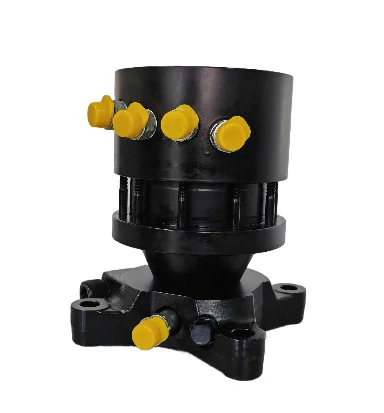
The distinction of a high-quality hydraulic rotator stems from an intricate blend of design innovation and material science, culminating in superior performance metrics that directly impact operational outcomes. Key technical advantages begin with their robust bearing systems, often featuring heavy-duty tapered roller bearings or large diameter slew rings. These are meticulously engineered to absorb significant axial and radial loads, distributing stresses evenly to prevent premature wear and maintain rotational precision even under immense, sustained pressures. Precision machining ensures minimal backlash, delivering immediate and accurate responses to operator inputs—a critical factor in tasks requiring delicate placement or aggressive demolition. Furthermore, advanced sealing technologies, utilizing specialized compounds designed to resist aggressive hydraulic fluids, extreme temperatures, and abrasive contaminants, prevent leaks and extend the service life of internal components, drastically reducing downtime for maintenance. Power-to-weight ratio is another hallmark; modern rotators achieve impressive torque outputs (e.g., up to 20,000 Nm for mid-range units, enabling the secure handling of loads exceeding 10 tons) while maintaining a compact footprint, optimizing machine balance and payload capacity. Rotational accuracy is often within ±0.5 degrees, allowing for highly precise adjustments that manual or less sophisticated systems cannot match. Flow requirements are optimized, typically ranging from 20 to 100 liters per minute depending on the model and application, ensuring smooth, consistent rotation without excessive energy consumption. These meticulously engineered specifications translate into tangible benefits: faster operational cycles, reduced fuel consumption due to optimized power delivery, and a significantly extended operational lifespan for both the rotator and the attached implement. It's this commitment to engineering excellence that elevates a mere swivel into a high-performance, load-bearing rotational powerhouse.
Designing hydraulic rotators for longevity and resilience in the harshest operational environments is a testament to advanced engineering principles and rigorous material selection. These devices are frequently deployed in conditions where extreme temperatures, corrosive elements, abrasive dust, and persistent moisture are the norm, demanding components that can withstand relentless abuse without compromise. High-grade alloy steels, often heat-treated to achieve optimal hardness and tensile strength, form the backbone of the rotator housing and internal components, offering exceptional resistance to impact and fatigue. Surface treatments, such as specialized coatings (e.g., nitride treatments or ceramic coatings), are applied to critical wear surfaces to enhance corrosion resistance and reduce friction, significantly extending the lifespan of seals and bearings. The internal hydraulic passages are often designed with smooth, optimized geometries to minimize pressure drop and turbulence, ensuring efficient power transmission and reducing internal wear. Furthermore, the selection of robust seals made from materials like Viton or HNBR ensures chemical compatibility with various hydraulic fluids and maintains integrity across wide temperature ranges, from sub-zero conditions in arctic forestry to scorching desert construction sites. Manufacturers also employ advanced simulation tools and finite element analysis (FEA) during the design phase to predict stress points and optimize material distribution, eliminating weak links before production begins. For example, a rotator designed for continuous operation in a waste processing plant might undergo over 1 million duty cycles in accelerated testing, demonstrating its capacity for sustained performance. This meticulous approach to engineering, from conceptualization through manufacturing, ensures that each rotator is not just built for immediate performance but for enduring reliability and minimal maintenance requirements over thousands of hours of demanding service, providing operators with a trustworthy and robust solution.
Navigating the diverse landscape of hydraulic rotator manufacturers requires a nuanced understanding of their specific strengths and product philosophies. While many companies produce robust rotators, their approaches to design, material choice, and after-sales support can vary significantly, impacting long-term value and suitability for specific applications. Below is a comparative overview of several prominent (generic) manufacturers, highlighting key differentiators that buyers should consider when making an investment. This table serves as a guide to illustrate the spectrum of choices available, emphasizing that the "best" choice is always contingent on the specific operational demands and budgetary constraints of your project.
Feature | Industrial Dynamics | Precision Hydraulics Inc. | Robust Solutions Co. | Global Systems Tech |
Max Load Capacity (Metric Tons) | 12 | 10 | 15 | 8 |
Peak Torque Output (Nm) | 18,000 | 16,000 | 22,000 | 14,000 |
Housing Material | High-Strength Alloy Steel (Forged) | Cast Ductile Iron | Hardened Chromium Steel | Standard Alloy Steel |
Bearing Type | Dual Tapered Roller Bearings | Single Slew Ring Bearing | Quadruple Tapered Roller Bearings | Standard Ball Bearings |
Sealing Technology | Multi-Lip Nitrile/Viton | Single-Lip HNBR | Reinforced Polyurethane/PTFE | Standard NBR |
Standard Warranty (Years) | 2 | 1 | 3 | 1 |
Customization Options | High (Mounting, Hoses, Seals) | Moderate (Mounting) | Very High (Full System Integration) | Limited |
Price Range (Relative) | $$$ | $$ | $$$$ | $ |
Target Application | General Heavy Duty, Forestry | Mid-range Construction, Recycling | Extreme Duty, Mining, Marine | Light Duty, Agricultural |
As the table illustrates, a manufacturer like Robust Solutions Co. might offer superior load capacity and longer warranties, indicative of their focus on extreme-duty applications and higher initial investment. In contrast, Global Systems Tech provides a more economical option suitable for lighter tasks where budget is a primary concern. Industrial Dynamics strikes a balance, offering robust performance for a wide range of heavy-duty tasks without reaching the premium price point of specialized solutions. Precision Hydraulics Inc. delivers solid performance for mid-range applications, often favored for their reliability in common construction and recycling scenarios. Beyond these technical specifications, evaluating a manufacturer's reputation for customer service, parts availability, and global support network is equally critical for ensuring long-term operational success and minimizing potential downtimes.
The "one-size-fits-all" approach rarely thrives in the specialized realm of heavy machinery. Recognizing this, leading hydraulic rotator manufacturers offer extensive customization and integration services, ensuring their products perfectly align with the unique demands of specific applications and existing equipment ecosystems. This flexibility is crucial for maximizing efficiency, ensuring seamless operation, and unlocking the full potential of an investment. Customization often begins with mechanical interfaces: clients may require bespoke mounting plates or adapters to ensure perfect compatibility with their existing excavators, cranes, or material handlers. This might involve specific bolt patterns, pin sizes, or bracket designs that deviate from standard offerings. Hydraulic connections are another critical area; varying machine models dictate different port sizes, thread types (e.g., BSP, NPT, JIC), and pressure ratings. Manufacturers work closely with clients to specify the correct hydraulic manifolds, valves, and hose routing to ensure optimal flow and pressure management without requiring cumbersome field modifications. Furthermore, specialized environmental requirements can necessitate custom protective elements, such as hardened guards for abrasive environments, specialized anti-corrosion coatings for marine applications, or extreme-temperature seals for polar or high-heat operations. Control system integration is increasingly vital; advanced rotators can be equipped with sensors for precise position feedback, enabling integration with machine control systems for automated or semi-automated operations. This might involve CAN bus integration for seamless communication with the host machine’s PLC. Imagine a custom solution for a nuclear decommissioning project, requiring a rotator with specific radiation-hardened materials and remote diagnostic capabilities. Such projects exemplify the depth of customization possible, turning a standard component into a highly specialized, mission-critical tool. Engaging a manufacturer early in the project design phase allows for collaborative engineering, ensuring that the customized rotator not only meets but exceeds specific operational requirements, leading to optimized performance, reduced installation time, and ultimately, a safer and more productive work environment tailored precisely to the user's operational needs.
The versatility and robust performance of hydraulic rotators have made them indispensable across a wide spectrum of industries, fundamentally transforming operational efficiency and safety. In the forestry sector, for instance, a grapple equipped with a high-torque rotator can precisely position and stack logs, dramatically reducing handling time and increasing timber yield per hour. A specialized forestry excavator equipped with such a system can process up to 30% more cubic meters of wood compared to less agile setups, minimizing manual intervention and risk. Waste management facilities rely heavily on these devices; material handlers fitted with rotating grapples can meticulously sort diverse waste streams, from municipal solid waste to demolition debris, enabling higher recycling rates and more efficient landfill management. A typical waste processing plant might utilize rotators capable of continuous 360-degree rotation to sort over 500 tons of material daily, separating plastics, metals, and organic waste with unparalleled precision. Construction and demolition sites are also prime beneficiaries, where rotating pulverizers and shears mounted on excavators can dismantle structures with surgical accuracy, minimizing collateral damage and expediting debris removal. This allows for targeted demolition, often reducing project timelines by 15-20% compared to traditional methods. In the agricultural sector, specialized attachments for bale handling or crop processing can be precisely oriented, improving efficiency and reducing crop damage. Marine applications, such as salvage operations or offshore construction, leverage rotators for precise underwater manipulation of heavy components, often operating reliably at significant depths and under immense pressure. Even in highly specialized fields like railway maintenance, track layers use rotators to accurately position and lay concrete sleepers, enhancing both speed and safety. These examples underscore how the advanced capabilities of modern rotators empower industries to undertake complex tasks with greater control, enhanced safety, and significantly improved operational throughput, demonstrating a tangible return on investment through optimized processes and reduced labor costs.
As industries continue to demand greater precision, efficiency, and autonomy from their machinery, the evolution of the rigid hydraulic rotator is accelerating, driven by advancements in materials science, sensor technology, and smart hydraulic systems. The future landscape promises even more sophisticated integration and enhanced capabilities. One significant trend is the incorporation of advanced sensor arrays that provide real-time data on load, position, temperature, and even internal wear. This data feeds into predictive maintenance systems, allowing operators to anticipate potential failures and schedule servicing proactively, thereby minimizing unscheduled downtime. For example, a rotator equipped with integrated sensors could report anomalous vibration patterns, indicating a bearing nearing its service limit long before a catastrophic failure. Another innovation lies in the realm of lightweighting and material innovation; the development of composite materials and advanced manufacturing techniques aims to reduce the overall weight of rotators without compromising strength or durability, leading to improved fuel efficiency and greater payload capacity for the host machine. The push towards electrification in heavy equipment also influences rotator design, requiring solutions that are compatible with electric power trains, potentially incorporating electric motors for rotational drive alongside hydraulic clamping or locking mechanisms. Furthermore, the integration of artificial intelligence and machine learning algorithms could enable rotators to perform tasks with greater autonomy, adapting their rotational speed and torque based on real-time environmental conditions and material properties, significantly boosting productivity in repetitive tasks. Consider a future where a rigid hydraulic rotator on a sorting machine intelligently adjusts its grip and rotation speed based on the type and weight of the object being handled, all without direct operator intervention. This confluence of technological advancements ensures that the rigid hydraulic rotator will remain a pivotal component in the ongoing quest for smarter, safer, and more productive heavy equipment across all industrial sectors, solidifying its role as an indispensable tool for future operational excellence.
· What is a rigid hydraulic rotator and how does it differ from other types of rotators?
A rigid hydraulic rotator is a hydraulically powered device designed to provide controlled, continuous, and bidirectional rotational movement for heavy equipment attachments. Unlike free-swinging or limited-angle rotators, a rigid rotator maintains a fixed angular position relative to the attachment point, preventing unwanted swaying or uncontrolled movement of the implement and payload. It offers precise control, high torque, and robust load-bearing capabilities.
· What are the primary benefits of using a rigid hydraulic rotator in heavy machinery?
The main benefits include enhanced precision and control over attached implements, significantly improved operational efficiency by reducing cycle times, increased safety by minimizing uncontrolled movements, greater versatility for complex tasks, and reduced wear on the host machine due to optimized load distribution. It also extends the functionality of standard equipment.
· What industries commonly utilize rigid hydraulic rotators?
Rigid hydraulic rotators are critical across numerous industries, including forestry (grapples, felling heads), construction and demolition (pulverizers, shears, sorting grapples), waste management and recycling (material handlers), agriculture (bale grabbers, specialized tools), mining, and marine applications (salvage, offshore construction).
· What technical specifications should I consider when selecting a rigid hydraulic rotator?
Key technical specifications include maximum load capacity (axial and radial), peak torque output, hydraulic flow and pressure requirements, rotational speed, bearing type, housing material, sealing technology, and the overall dimensions and weight of the unit. Compatibility with your host machine's hydraulic system and mounting interface is also crucial.
· Can rigid hydraulic rotators be customized for specific applications?
Yes, most leading manufacturers offer extensive customization options. This can include bespoke mounting interfaces, specialized hydraulic connections, specific seal materials for extreme environments, custom coatings for corrosion resistance, integration with machine control systems, and even tailored rotational angles or speeds to meet unique operational requirements.
· How does a rigid hydraulic rotator contribute to job site safety?
By providing precise control over heavy loads and implements, rigid rotators significantly enhance safety. They eliminate uncontrolled swinging or pendulum effects, reduce the risk of accidental drops or collisions, and allow operators to position materials with greater accuracy from a safe distance, thereby minimizing manual handling and exposure to hazards.
· What is the typical lifespan and maintenance requirement for a rigid hydraulic rotator?
With proper installation and regular maintenance, a high-quality rigid hydraulic rotator can have an operational lifespan of many thousands of hours (e.g., 5,000 to 15,000+ hours, depending on duty cycle and environment). Maintenance typically involves regular checks of hydraulic fluid levels and quality, inspection of seals and bearings for wear, lubrication according to manufacturer guidelines, and periodic replacement of wear parts. Modern units often feature design elements for easier serviceability.