In the demanding world of material handling, logging, demolition, and recycling, the efficiency and precision of equipment are paramount. At the heart of many high-performance operations lies a critical, yet often underestimated component: the grapple rotator motor. This hydraulic powerhouse dictates the agility, strength, and control of a grapple attachment, directly influencing productivity and operational costs. Modern industrial environments are increasingly relying on advanced rotator motors to achieve unprecedented levels of accuracy and speed. Consider the tangible impact: a high-quality grapple rotator motor can reduce cycle times by as much as 15-20% in forestry applications, translating into significant increases in cubic meters processed per shift. In demolition, a robust rotator motor enhances precision sorting and placement, potentially decreasing material separation time by 10%. The difference between a standard and an optimized rotator motor isn't merely incremental; it often represents a paradigm shift in operational capability. Operators experience reduced fatigue, greater control over awkward loads, and a dramatic improvement in overall workflow. This foundational component's ability to provide continuous, bidirectional rotation, often with integrated braking systems, ensures that even the most cumbersome materials can be positioned exactly where needed, minimizing repositioning and maximizing throughput. Investing in a superior grapple rotator motor is not merely an upgrade; it's a strategic decision that underpins the entire operational efficacy of your heavy machinery fleet.
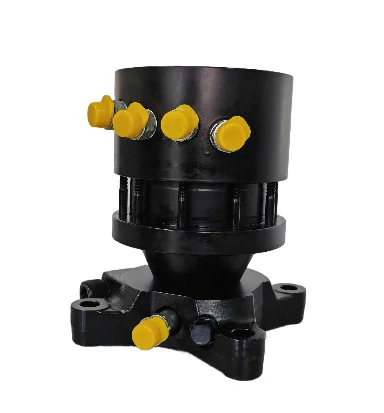
The technical specifications of a grapple rotator motor are critical determinants of its real-world performance. Advanced rotator motors leverage sophisticated hydraulic engineering to deliver unparalleled power and control. Key metrics include torque output, typically measured in Nm (Newton-meters), which signifies the motor's rotational strength; rotation speed, measured in RPM (Revolutions Per Minute), dictating how quickly the grapple can turn; and permissible axial/radial load capacities, crucial for enduring the immense forces encountered during operation. For instance, a high-performance unit might offer a continuous torque output exceeding 4,000 Nm at 210 bar, coupled with a rotation speed of 25-30 RPM, enabling rapid and precise material manipulation. These motors often feature robust internal gearing, typically planetary gears, designed for high shock resistance and extended lifespan. Precision-machined components, hardened steel shafts, and heavy-duty bearings contribute to their resilience in harsh environments. Furthermore, modern rotator motors incorporate advanced sealing technologies, such as double lip seals or labyrinth seals, to prevent contaminants from entering the hydraulic system, significantly extending service intervals and reducing maintenance downtime. The integration of pressure relief valves and anti-cavitation features safeguards the hydraulic system against sudden pressure spikes and vacuum conditions, ensuring consistent performance and protecting the motor from premature wear. Understanding these technical nuances allows for informed selection, ensuring the chosen rotator motor not only meets but exceeds the demands of specific operational challenges, providing a tangible return on investment through enhanced reliability and reduced operational interruptions.
The market for grapple rotator motors is diverse, with numerous manufacturers offering a range of products catering to different applications and budget points. Selecting the right supplier involves a careful evaluation of their product range, technical innovations, reliability, and after-sales support. While many brands offer robust solutions, there are distinct differences in their core strengths, warranty provisions, and global service networks. Some manufacturers excel in high-torque, heavy-duty applications, often favored in forestry or large-scale demolition, while others focus on compact designs suitable for lighter excavators or precise sorting tasks. Below is a comparative overview of hypothetical leading manufacturers, highlighting their key strengths and typical offerings. This table is designed to illustrate the types of differentiation one might find in the market, emphasizing the importance of aligning manufacturer strengths with specific operational requirements. Buyers must critically assess not just initial cost, but total cost of ownership, including expected lifespan, availability of spare parts, and the manufacturer's commitment to innovation and customer service. A deeper dive into specific model specifications, user reviews, and independent performance tests is always recommended to ensure optimal product selection.
Manufacturer | Typical Target Applications | Key Technological Focus | Estimated Lifespan (Operating Hours) | Warranty Period (Years) | Notable Feature/Advantage |
HydraForce Industries | Forestry, Heavy Demolition | High Torque, Integrated Braking | 15,000 - 20,000+ | 3 | Exceptional Durability in Extreme Conditions |
Rotex Dynamics | Recycling, Material Handling | Precision Control, Energy Efficiency | 12,000 - 18,000 | 2 | Smooth, Jolt-Free Operation for Delicate Sorting |
MegaRotate Systems | Construction, Utility Work | Compact Design, High Power-to-Weight Ratio | 10,000 - 15,000 | 2 | Ideal for Smaller Excavators and Tight Spaces |
GlobalGear Innovations | Marine, Specialty Applications | Corrosion Resistance, Modular Design | 18,000 - 22,000+ | 3-5 (application dependent) | Customizable for Unique, Demanding Environments |
The effectiveness of a grapple rotator motor is not solely determined by its inherent capabilities but also by its seamless integration into specific machinery and operational contexts. True optimization often necessitates a degree of customization, where standard units are adapted or bespoke solutions are engineered to meet unique challenges. This can range from modifying mounting plates to ensure perfect compatibility with an existing excavator's quick coupler system, to integrating specialized hydraulic lines and control systems for enhanced functionality. Customization options might include specialized seals for corrosive environments, heat-resistant coatings for high-temperature operations, or the incorporation of specific sensor packages for advanced telemetry and predictive maintenance. For example, a logging company operating in sub-zero temperatures might require a rotator motor engineered with specific low-temperature hydraulic fluids and robust seals designed to resist cracking, alongside an integrated heating element. A demolition firm, conversely, might prioritize a motor with superior shock absorption capabilities and reinforced casings to withstand constant impact. Manufacturers who offer robust engineering support and modular designs are invaluable in this regard, providing tailored hydraulic schematics and control interfaces that ensure plug-and-play compatibility and optimal performance from day one. The ability to customize hydraulic flow, pressure settings, and electrical connections ensures that the rotator motor performs symbiotically with the prime mover, maximizing its potential and minimizing the risk of hydraulic incompatibilities or mechanical stresses. This commitment to tailored solutions transforms a generic component into a purpose-built asset, significantly enhancing operational efficiency and longevity.
The versatility and robust performance of modern grapple rotator motors are evident across a multitude of heavy industries, each presenting its unique set of challenges and demands. In the forestry sector, for instance, a grapple with a precision rotator motor allows operators to selectively thin trees, stack logs with unprecedented uniformity, and load trailers with maximum efficiency, reducing loading times by up to 20%. The ability to precisely orient logs minimizes damage to surrounding vegetation and maximizes payload density. For demolition and recycling operations, the precise control offered by these motors is indispensable. Operators can sort debris with surgical accuracy, separating concrete from rebar or wood from plastics, thereby significantly increasing material recovery rates and reducing landfill waste. A case study from a metropolitan recycling plant revealed a 15% increase in sorted material purity and a 12% reduction in processing time after upgrading to rotator motors with enhanced proportional control. In material handling at ports or industrial yards, grapple rotators enable swift and secure movement of irregularly shaped cargo, bulk materials, or even scrap metal. The rapid reorientation capabilities contribute directly to faster vessel turnaround times or improved warehouse logistics. Even in agricultural applications, such as handling silage bales or clearing land, the added dexterity provided by a high-quality rotator motor proves invaluable. These real-world applications underscore that the grapple rotator motor is not just an accessory, but a core component driving operational excellence, safety, and profitability across diverse and demanding working environments. Its impact extends beyond mere functionality, redefining what's achievable in terms of speed, precision, and economic output.
Ensuring the sustained peak performance of any grapple rotator motor hinges critically on adherence to a rigorous maintenance schedule and having access to reliable technical support. While modern rotator motors are designed for durability, they operate under immense stress and are exposed to harsh conditions. Regular inspections are crucial, focusing on hydraulic line integrity, seal conditions, bearing play, and mounting bolt tightness. Hydraulic fluid quality and level should be checked daily, with scheduled fluid and filter changes performed according to manufacturer recommendations – typically every 500-1000 operating hours. This prevents contamination, which is a leading cause of premature hydraulic component failure. Lubrication points, if applicable, must be greased consistently to minimize friction and wear. Furthermore, operators play a pivotal role in preventative maintenance. Proper operational techniques, such as avoiding excessive shock loads, not exceeding specified load capacities, and refraining from 'jogging' the motor unnecessarily, can significantly extend its lifespan. Training programs for operators, emphasizing gentle control inputs and awareness of equipment limitations, contribute directly to reducing wear and tear. In the event of an issue, prompt access to manufacturer-approved spare parts and certified service technicians is invaluable. A robust service network with readily available components can dramatically reduce costly downtime, often translating to the difference between a minor repair and a major operational disruption. Comprehensive technical manuals and online diagnostic tools also empower in-house maintenance teams to troubleshoot effectively, further enhancing uptime and ensuring the grapple rotator motor continues to deliver optimal performance throughout its service life.
The landscape of heavy equipment is continuously evolving, and the grapple rotator motor is no exception. Future innovations are set to push the boundaries of efficiency, intelligence, and environmental sustainability. We can anticipate advancements in materials science leading to lighter yet stronger components, reducing the overall weight of the grapple assembly without compromising durability. Integration with IoT (Internet of Things) platforms will become standard, allowing for real-time performance monitoring, predictive maintenance alerts, and remote diagnostics. Imagine a rotator motor proactively reporting potential seal failures or bearing wear months in advance, enabling scheduled preventative repairs rather than reactive, costly breakdowns. Energy efficiency will also be a major focus, with developments in smart hydraulics that optimize flow and pressure based on load, reducing fuel consumption and emissions. Hybrid and electric drive systems, currently nascent, will become more prevalent, offering quieter operation and zero local emissions—a significant advantage in urban environments. Furthermore, enhanced safety features, such as advanced overload protection systems and collision avoidance sensors integrated directly into the rotator motor's control architecture, will protect both equipment and personnel. The trend towards greater automation in heavy machinery will also drive the need for even more precise and responsive rotator motors, capable of executing complex maneuvers with minimal human intervention. Ultimately, investing in state-of-the-art grapple rotator motor technology is an investment in future-proofing operations, ensuring competitive advantage through unparalleled efficiency, reliability, and adaptability in an increasingly demanding industrial world.
What is the primary function of a grapple rotator motor?
The primary function is to provide continuous, bidirectional 360-degree rotation to a hydraulic grapple attachment, enabling precise positioning, sorting, and manipulation of materials without needing to reposition the base machine.
What factors should I consider when choosing a grapple rotator motor?
Key factors include the grapple's weight and capacity, the base machine's hydraulic flow and pressure, required torque output, rotation speed, duty cycle, environmental conditions (temperature, contaminants), and the manufacturer's reputation for durability and support.
How does a hydraulic rotator motor differ from a mechanical rotator?
A hydraulic rotator motor uses hydraulic pressure to power its rotation, offering continuous 360-degree movement and fine control. Mechanical rotators typically rely on gears driven by the machine's PTO or external motor, often with limited rotation angles or less precise control.
What are the common causes of failure for grapple rotator motors?
Common causes include hydraulic contamination, exceeding load capacities, improper maintenance (e.g., lack of lubrication, infrequent fluid changes), impact damage, worn seals leading to leaks, and excessive shock loads.
Can a grapple rotator motor be repaired, or does it always need replacement?
Many common issues, such as seal leaks, bearing wear, or minor hydraulic component failures, can be repaired by qualified technicians. However, severe internal damage (e.g., cracked housing, major gear train failure) may necessitate full replacement.
What maintenance is required for a grapple rotator motor?
Regular maintenance involves daily checks of hydraulic fluid levels and condition, scheduled hydraulic fluid and filter changes, inspection of hydraulic lines and seals for leaks, lubrication of grease points (if applicable), and checking mounting bolts for tightness.
Are grapple rotator motors compatible with all types of excavators and grapples?
While many rotator motors are designed for broad compatibility, specific models are rated for certain grapple weights and hydraulic systems. Compatibility depends on hydraulic flow, pressure, mounting patterns, and electrical interfaces. Customization or adapter plates may be required for specific machine-grapple combinations.